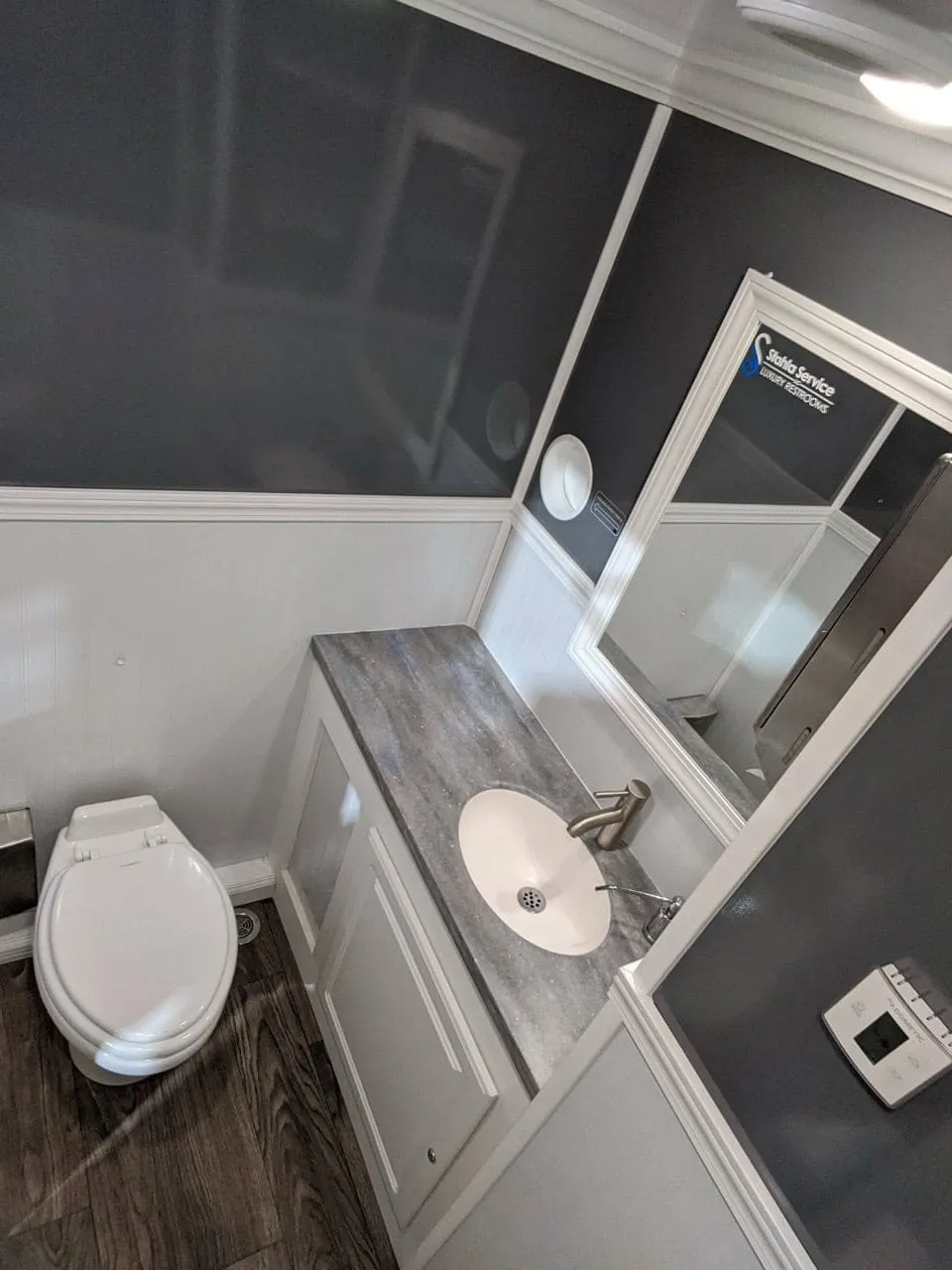
Commercial construction projects across Texas—from retail centers in growing suburbs to office buildings in urban cores—demand professional standards in every aspect of site operations, including worker sanitation. The scale, complexity, and visibility of commercial projects make quality restroom facilities more than a regulatory requirement; they reflect the professionalism of the entire construction operation. Restroom trailers have become the standard choice for Texas commercial construction sites, providing the comfort, capacity, and professional appearance these projects demand.
Commercial Project Characteristics and Restroom Needs
Commercial construction projects differ from residential work in scale, workforce composition, and visibility. Office buildings, retail centers, warehouses, and industrial facilities involve larger workforces, more complex coordination among trades, and greater public visibility during construction. These characteristics influence restroom planning in important ways.
Workforce sizes on commercial projects often range from 50 workers during initial phases to 200 or more during peak construction. Unlike residential sites where crews may work independently on different homes, commercial projects concentrate workers in a single location, creating concentrated demand for restroom facilities during break times.
Professional presentation matters on commercial construction sites. Property owners, tenants, investors, and community members visit sites throughout construction. The condition of construction facilities, including restrooms, creates impressions that reflect on the project and its participants. Quality restroom trailers demonstrate attention to professional standards.
OSHA Compliance for Larger Workforces
Commercial project workforce sizes require careful attention to OSHA sanitation requirements. For sites with 20-200 workers, regulations require one toilet and one urinal per 40 workers. Sites exceeding 200 workers need one toilet and one urinal per 50 workers. These calculations establish minimum requirements that professional contractors typically exceed.
Handwashing facilities with potable running water represent another OSHA requirement. Restroom trailers incorporate handwashing stations with hot and cold water, soap dispensers, and paper towels, meeting this requirement without additional equipment. Traditional portable toilets require separate handwashing stations to achieve compliance.
ADA-compliant restroom trailers ensure accessibility for workers with disabilities and prepare for accessible visitor access during site tours. Many commercial contractors include ADA facilities as standard practice, ensuring immediate accommodation for any worker or visitor requiring accessibility features.
Peak Demand Management
Commercial construction concentrates workers in single locations, creating peak demand periods that challenge restroom capacity. Break times—typically mid-morning, lunch, and mid-afternoon—see virtually all workers seeking restroom access within short windows. Sizing facilities for peak demand rather than average usage prevents problematic queues.
Calculate peak demand assuming 10-15% of workers will need facilities during any 10-minute peak period. A site with 150 workers might see 15-22 workers seeking restrooms simultaneously during peak times. Having adequate capacity during these periods prevents frustration and productivity loss.
Consider distributing facilities across the site to spread demand and reduce travel time. Workers from different areas naturally gravitate to the nearest facilities, distributing usage across multiple locations. This approach requires more total capacity but improves access and reduces concentrated demand at single locations.
Multiple Trade Coordination
Commercial projects involve numerous specialty contractors working on their respective systems—electrical, plumbing, HVAC, fire protection, drywall, flooring, and more. General contractors typically provide restroom facilities for all workers, allocating costs through subcontract provisions. Clear expectations about facility access help coordination among trades.
Different trades work in different areas at different times, affecting facility placement needs. Early phases might concentrate activity in core areas, while finishing phases spread workers throughout the building. Flexible facility placement or multiple locations accommodate changing work patterns.
Peak trade overlap occurs when multiple specialty contractors work simultaneously during critical project phases. These periods create highest restroom demand, often exceeding what any individual trade would require. Plan capacity for these overlap periods rather than individual trade requirements.
Site Visitor Considerations
Commercial construction sites receive more visitors than typical residential projects. Property owners, investors, future tenants, architects, engineers, inspectors, and community representatives visit sites regularly. These visitors expect professional facilities, and their impressions influence perceptions of project quality.
Position high-quality restroom trailers near site entrances where visitors access the project. These facilities should receive priority maintenance to ensure consistently clean, well-stocked conditions. Consider luxury-tier trailers near visitor access points for projects where impression management is particularly important.
ADA accessibility at visitor-accessible locations ensures all visitors can use facilities comfortably. This includes not only wheelchair accessibility but also adequate space, grab bars, and appropriate fixture heights for visitors with various mobility needs.
Climate Control for Texas Commercial Sites
Texas commercial construction continues year-round, exposing facilities to temperature extremes. Summer temperatures exceeding 100 degrees make air-conditioned restroom trailers essential for worker comfort. The enclosed nature of commercial construction sites may provide some shade for facilities, but climate control remains important.
Air conditioning capacity should match Texas summer demands. Undersized cooling systems struggle during peak afternoon heat, when interior temperatures become uncomfortable despite nominal air conditioning. Discuss cooling capacity with rental providers to ensure adequate performance.
Winter heating prevents plumbing freezes and maintains worker comfort during cold periods. While Texas winters are generally mild, freezing temperatures do occur, particularly in northern regions. Heated trailers maintain operation and comfort during cold snaps.
Urban Site Constraints
Commercial construction in urban Texas locations often faces significant site constraints. Downtown sites, infill developments, and constrained suburban locations may offer limited space for restroom facilities. Creative solutions accommodate sanitation needs within tight footprints.
Compact multi-station restroom trailers maximize capacity within limited space. These units provide more facilities per square foot than multiple individual units, making efficient use of scarce ground area. Discuss site constraints with rental providers to identify appropriate configurations.
Street or sidewalk permits may be required for trailer placement in urban locations. Coordinate with local authorities early in project planning to understand permit requirements and timelines. Some jurisdictions require specific placement configurations or access provisions.
Project Phase Progression
Commercial construction progresses through phases with different workforce sizes and facility needs. Early site work and foundation phases may involve 30-50 workers. Structural phases often double workforce size. Interior finishing phases may see the largest workforces as multiple trades complete simultaneously.
Plan facility capacity for peak workforce phases, but consider flexible arrangements for phases with smaller crews. Some rental providers offer capacity adjustments during projects, adding units during peak periods and removing them during lighter phases.
As building systems become operational, transitioning to permanent building restrooms reduces rental costs. This transition typically occurs during final construction phases, when permanent facilities can safely accommodate worker use while protecting finished surfaces.
Service Requirements for Commercial Sites
Larger workforces require more frequent service to maintain hygiene standards. While weekly service may suffice for small crews, commercial sites with 100 or more workers often need twice-weekly service to maintain clean, well-stocked facilities. Peak periods may require even more frequent attention.
Coordinate service schedules with site operations. Early morning service before worker arrival ensures fresh conditions throughout the workday. Avoid scheduling service during peak work periods when facility access is most needed.
Emergency service availability handles unexpected situations—equipment malfunctions, unusually high usage, or other issues requiring immediate attention. Discuss emergency service provisions with rental providers and establish clear communication channels for urgent needs.
Documentation and Compliance Records
Commercial construction projects often involve documentation requirements that include sanitation provisions. Owner representatives, construction managers, or regulatory inspectors may request records demonstrating OSHA compliance. Maintain records of facility counts, service schedules, and any compliance-related communications.
Site safety plans should address restroom facility provisions, including locations, quantities, and emergency procedures. Regular safety meetings can remind workers of facility locations and proper use expectations. Documentation demonstrates systematic attention to worker welfare and regulatory requirements.
Service records from rental providers document maintenance activities. Retain these records throughout the project and for a period afterward in case questions arise about sanitation compliance during construction.
Planning Your Commercial Construction Restroom Strategy
Successful sanitation planning for Texas commercial construction begins with understanding your project’s workforce curve and visitor profile. Calculate peak workforce requirements, identify visitor access patterns, and plan facility capacity and placement accordingly. This comprehensive approach ensures professional facilities throughout construction.
Working with experienced Texas restroom trailer providers ensures appropriate recommendations for your commercial project’s requirements. Local providers understand Texas climate demands, urban constraints, and professional standards expected on commercial construction sites.
Quality restroom facilities reflect the professionalism of your entire construction operation. The investment in proper sanitation supports productive workers, satisfies visitors, and maintains the professional image your commercial project deserves. Request a quote today to discuss restroom trailer solutions for your Texas commercial construction project.