When Texas construction managers plan job site sanitation, they face a fundamental choice: traditional porta potties or modern restroom trailers. While both options meet OSHA’s basic requirement for toilet facilities, the differences in worker experience, functionality, and long-term value are substantial. This comparison helps Texas construction professionals evaluate which option best serves their projects, crews, and bottom line. Restroom trailers offer advantages that increasingly make them the preferred choice for Texas construction sites.
The Basics: What Each Option Provides
Traditional porta potties are single-unit enclosed structures with a toilet seat over a holding tank. Basic units include only a toilet and hand sanitizer dispenser. More advanced porta potties may include small hand wash stations with limited water supply. These units operate without external utilities, relying on chemical treatment of waste.
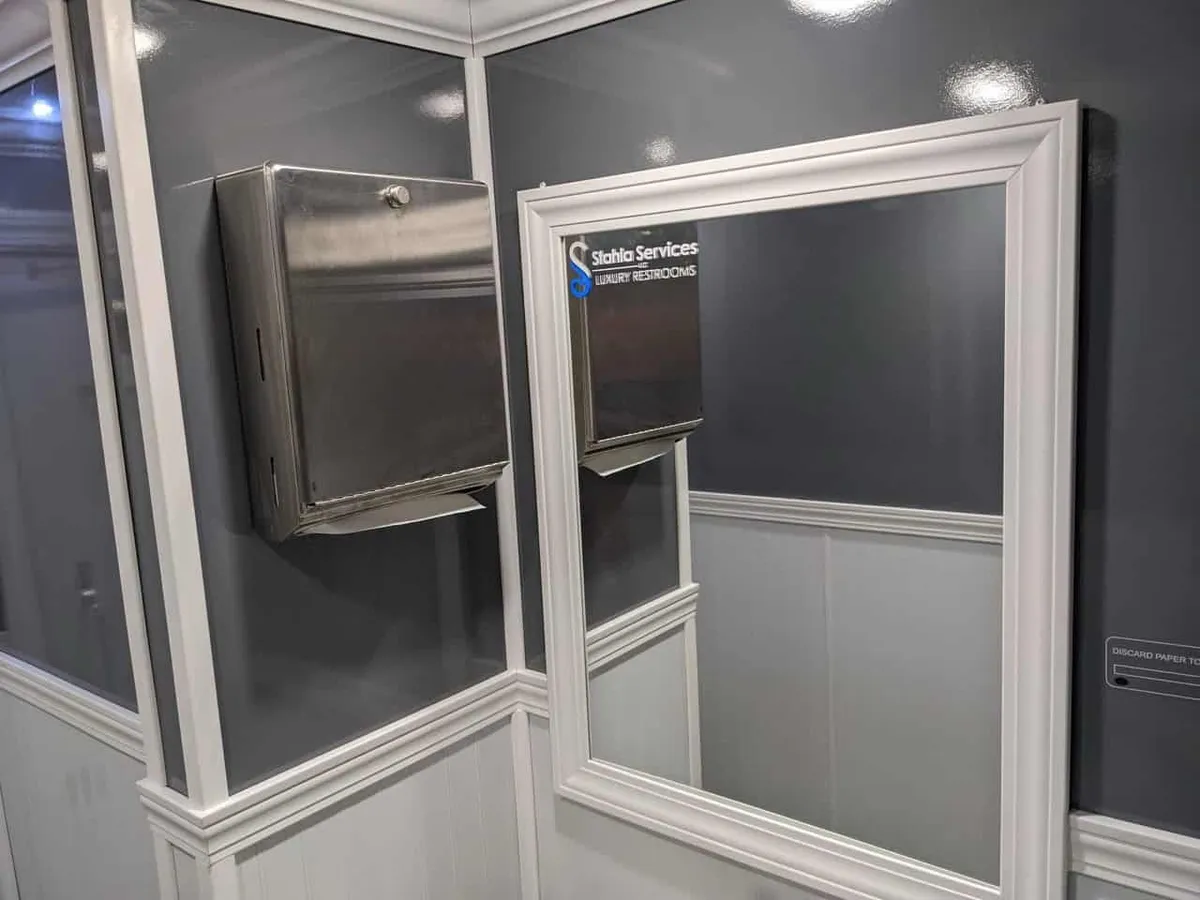
Restroom trailers are towable units containing full bathroom facilities similar to permanent building restrooms. Standard features include flush toilets, sinks with running hot and cold water, climate control, interior lighting, and ventilation. These units may operate independently using onboard water and power systems, or connect to external utilities when available.
The fundamental difference lies in the experience: porta potties provide minimal facilities for necessary functions, while restroom trailers offer comfortable environments comparable to indoor bathrooms. This difference affects worker behavior, health, and productivity in measurable ways.
Climate Control: Essential for Texas Construction
Perhaps no factor matters more for Texas construction than climate control. Standard porta potties have no climate control—they’re enclosed plastic boxes that trap heat in summer and cold in winter. The interior temperature of a porta potty in direct Texas sun can exceed 130-140 degrees on summer afternoons.
Workers in already heat-stressed conditions dread entering these superheated facilities. Many limit fluid intake to reduce restroom visits—a dangerous practice that increases heat illness risk. Others avoid using facilities entirely during the hottest hours, creating health and productivity problems.
Restroom trailers with air conditioning maintain comfortable temperatures regardless of outdoor conditions. Workers actually welcome breaks in climate-controlled facilities, encouraging proper hydration and regular restroom use. The health and safety benefits of comfortable facilities justify the investment, particularly during Texas summer construction.
Handwashing and Hygiene
OSHA requires handwashing facilities with potable running water for construction sites. Standard porta potties provide only hand sanitizer—which doesn’t meet OSHA requirements. Sites using only porta potties must add separate handwashing stations to achieve compliance.
Construction workers handle materials requiring thorough handwashing—concrete, adhesives, insulation, chemicals, and petroleum products. Hand sanitizer doesn’t effectively clean these substances from skin. Running water and soap provide the cleaning construction hygiene demands.
Restroom trailers include integrated handwashing facilities with hot and cold water, soap dispensers, and paper towels. Workers can properly clean hands after using facilities and before eating. This integrated approach provides convenience and ensures compliance without additional equipment.
Capacity and Efficiency
Porta potties are single-occupancy units serving one worker at a time. During peak demand periods—break times and lunch—lines form at individual units. A site with 50 workers and 3 porta potties experiences significant queuing during breaks, with some workers waiting while others work.
Multi-station restroom trailers serve multiple workers simultaneously. A 4-station trailer allows 4 workers to use facilities at once, handling peak demand more efficiently. The time saved during breaks translates directly to productivity—workers return to tasks faster rather than waiting in lines.
The efficiency advantage compounds with workforce size. Large sites requiring many porta potties create distributed queuing problems. Fewer multi-station trailers serving the same capacity create more efficient traffic patterns and faster throughput during peak periods.
Durability and Reliability
Porta potties are lightweight plastic structures vulnerable to wind, impact, and rough handling common on construction sites. Tipping, cracking, and door problems occur regularly. When units malfunction, workers lose access until repairs or replacement occur.
Restroom trailers are substantial structures built on trailer frames. Heavy-duty construction withstands the rigors of construction sites. Multiple stations mean a single fixture problem doesn’t eliminate all capacity—other stations remain operational while repairs occur.
Long-term rentals benefit from trailer durability. Over months of continuous use, porta potties may require multiple replacements due to damage, while restroom trailers maintain function throughout project duration with routine maintenance.
ADA Accessibility
Standard porta potties don’t meet ADA accessibility requirements. While oversized ADA porta potties exist, they provide minimal accessibility features—essentially a larger version of the same basic facility without true accommodations for wheelchair users or those with mobility limitations.
ADA-compliant restroom trailers provide genuine accessibility—ramped entry, appropriate interior dimensions, grab bars, accessible fixtures, and adequate maneuvering space. These facilities meet both the letter and spirit of accessibility requirements.
Including accessible facilities on job sites ensures immediate accommodation for any worker requiring accessibility features. The cost difference between standard and accessible trailers is minimal compared to the legal exposure and ethical obligation to provide proper accommodations.
Professional Image
Construction site conditions create impressions that affect relationships with clients, inspectors, and potential workers. Rows of porta potties signal basic compliance, while restroom trailers suggest attention to quality and worker welfare.
Client representatives visiting job sites notice facility quality. Clean, professional restroom trailers create positive impressions that extend to overall project perception. The facilities you provide communicate your standards for every aspect of the project.
Skilled workers increasingly consider job site conditions when choosing employers. In Texas’s competitive construction labor market, the quality of facilities influences whether experienced tradespeople choose your projects. Quality facilities support recruitment and retention.
Cost Comparison
Porta potties cost less per unit for basic rental. However, meaningful comparison requires considering total cost of ownership including service frequency, capacity per unit, additional equipment requirements (handwashing stations), and productivity impact.
Restroom trailers often include more comprehensive service than porta potties. When comparing options, ensure you’re evaluating equivalent service levels. Some apparent cost savings disappear when factoring in additional service visits or required handwashing equipment.
Consider productivity value. If restroom trailer comfort and efficiency save just a few minutes per worker per day, the cumulative productivity gain over a project duration often exceeds the cost premium over porta potties. On larger projects with longer durations, this value compounds significantly.
Maintenance and Service
Porta potties require frequent pumping and chemical treatment. Standard service includes waste removal, chemical replenishment, and basic cleaning. Heavy use may require twice-weekly or more frequent service to maintain acceptable conditions.
Restroom trailers with larger holding tanks and more efficient fixtures often require less frequent service despite providing superior facilities. Service includes waste pumping, freshwater replenishment, thorough cleaning, and supply restocking. The more substantial service supports the more substantial facility.
Climate control systems on restroom trailers require minimal maintenance during normal operation. Routine service addresses filter cleaning and system checks. Generator-powered units need fuel replenishment, while utility-connected units eliminate this requirement.
Environmental Considerations
Porta potties rely on chemical treatment to manage waste odor and decomposition. These chemicals vary in environmental impact. High-use conditions may require additional chemical treatment between service visits.
Restroom trailers with flush systems use water more efficiently than might be expected—low-flow fixtures minimize consumption while providing full functionality. Waste management follows similar disposal procedures to porta potties, but the enclosed trailer design contains potential environmental exposure more effectively.
Both options require proper waste disposal by licensed service providers. Documentation of waste handling demonstrates environmental compliance and protects against potential liability.
When to Choose Each Option
Porta potties may be appropriate for very short-term projects lasting just days, small crews of fewer than 10 workers, or remote locations with severe access limitations. When duration is brief and investment must be minimal, basic porta potties serve the essential function.
Restroom trailers make sense for projects lasting more than a week or two, crews exceeding 15-20 workers, Texas summer construction, sites with client or inspector visits, and any project where worker satisfaction and productivity matter. The advantages compound over time and with larger workforces.
Many Texas contractors maintain baseline restroom trailers for quality and supplement with porta potties only when temporary capacity peaks require additional units. This hybrid approach provides quality facilities for most workers while cost-effectively handling occasional overflow.
Making Your Decision
The choice between porta potties and restroom trailers ultimately reflects your priorities for worker welfare, project professionalism, and long-term value. While porta potties meet minimum requirements, restroom trailers provide the experience workers deserve and the professional standards clients expect.
For Texas construction, climate control alone often justifies restroom trailers. Adding handwashing compliance, capacity efficiency, professional image, and worker satisfaction creates compelling value that extends beyond simple cost comparison.
Quality restroom facilities represent an investment in your workers and your projects. Request a quote today to compare restroom trailer options for your Texas construction project and discover how modern facilities support successful project delivery.