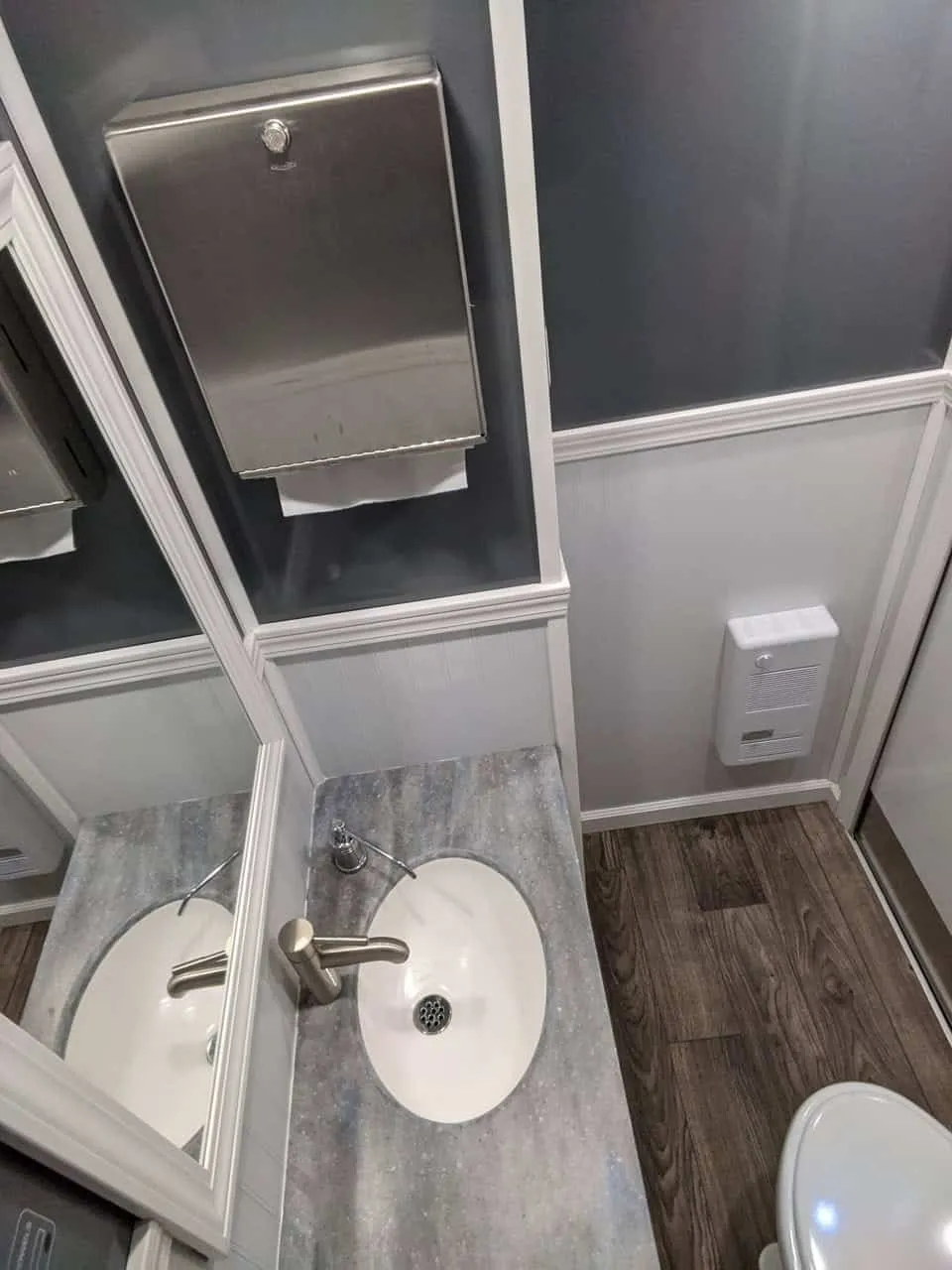
Texas construction projects face unique challenges when it comes to providing adequate restroom facilities for workers. From the scorching summer heat to remote job site locations, construction companies must carefully plan their sanitation solutions to maintain OSHA compliance, worker morale, and job site efficiency. Restroom trailers have emerged as the preferred solution for Texas construction sites, offering climate-controlled comfort and professional amenities that traditional portable toilets simply cannot match.
Understanding Texas Construction Site Restroom Requirements
Construction sites in Texas must adhere to specific OSHA regulations regarding sanitation facilities. According to OSHA standard 1926.51, construction employers must provide at least one toilet facility for every 20 workers. For sites with 20 or fewer employees, one facility is required. Sites with 20-200 workers need one toilet and one urinal per 40 workers, while larger sites with over 200 workers must provide one toilet and one urinal per 50 workers.
However, meeting the minimum requirements is just the baseline. Smart construction managers recognize that providing quality restroom facilities directly impacts worker productivity, health, and retention. In Texas’s competitive construction labor market, the quality of job site amenities can influence whether skilled workers choose your project over a competitor’s.
Why Construction Sites Choose Restroom Trailers Over Porta Potties
Traditional portable toilets have long been the default choice for construction sites, primarily due to their low initial cost. However, restroom trailers offer significant advantages that make them increasingly popular on Texas job sites, especially for projects lasting more than a few weeks.
Climate control stands out as the most significant benefit for Texas construction. When summer temperatures regularly exceed 100 degrees, a traditional portable toilet becomes an unbearable environment. Workers may avoid using facilities, leading to dehydration as they limit fluid intake. Air-conditioned restroom trailers maintain comfortable temperatures year-round, encouraging proper hydration and regular restroom use.
Running water for handwashing represents another critical advantage. Construction workers handle various materials throughout the day, from concrete and adhesives to insulation and finishing products. Proper handwashing with soap and running water is essential for worker health, yet impossible with traditional portable toilets. Restroom trailers include full sink stations with hot and cold water, soap dispensers, and paper towel dispensers.
Sizing Your Construction Site Restroom Needs
Determining the right restroom trailer configuration for your construction site requires careful consideration of several factors beyond simple headcount. Peak workforce numbers, shift schedules, project duration, and site layout all influence the optimal setup.
For smaller construction projects with 15-30 workers, a 2-station restroom trailer typically provides adequate capacity. This size offers separate facilities while remaining compact enough for tight urban job sites. The trailer can be positioned near the main work area, minimizing time workers spend traveling to and from restroom facilities.
Medium-sized projects with 30-75 workers benefit from either a larger 4-station trailer or multiple 2-station units strategically placed around the site. Large construction sites often span considerable distances, and providing multiple restroom locations prevents productivity losses from excessive walking time.
Major construction projects with 100 or more workers require comprehensive restroom planning. Multiple ADA-compliant restroom trailers ensure accessibility for all workers while meeting increased demand. Consider traffic patterns, work zones, and break areas when positioning multiple units.
ADA Compliance on Construction Sites
ADA requirements apply to construction job sites just as they do to permanent facilities. If any worker requires accessible restroom facilities, the employer must provide them. This includes workers with mobility impairments, injuries that temporarily limit movement, or other conditions requiring accessibility features.
ADA-compliant restroom trailers feature wider doorways, grab bars, lower sink heights, and adequate turning radius for wheelchair users. Many construction companies proactively include ADA-accessible units on all job sites, ensuring they can immediately accommodate any worker who needs these features.
Placement and Setup Considerations
Proper placement of restroom trailers on a construction site requires balancing accessibility with practical constraints. The ideal location minimizes worker travel time while avoiding interference with construction activities, equipment movement, and material storage areas.
Texas construction sites must consider ground conditions when positioning restroom trailers. The unit requires level ground with adequate stability to support the trailer weight. During wet weather, access paths should remain passable. Gravel pads or plywood platforms may be necessary for sites with particularly challenging soil conditions.
Utility connections represent another placement consideration. Restroom trailers require power for lighting, ventilation, and climate control. Most units operate on standard 110V or 220V power and can connect to site generators or temporary power poles. Water connections, if available, reduce service requirements, though many trailers operate with onboard freshwater tanks.
Long-Term Construction Project Planning
Texas construction projects often span months or even years. Long-term restroom trailer rentals require different considerations than short-term event rentals. Negotiating extended rental agreements typically yields better pricing, and establishing consistent service schedules ensures reliable maintenance throughout the project duration.
As construction projects progress, restroom needs may change. Early phases might involve earthwork crews of 20-30 workers, while peak construction periods might see 100 or more workers on site. Flexible rental arrangements allow adding or removing units as workforce numbers fluctuate.
Consider the project timeline when planning restroom placement. Units may need to be relocated as buildings are constructed and site access changes. Discuss mobility requirements with your rental provider to ensure trailers can be moved when necessary without disrupting worker access to facilities.
Service and Maintenance Requirements
Construction site restroom trailers require regular service to maintain hygiene and functionality. Service frequency depends on the number of users and climate conditions. Texas summer heat accelerates waste decomposition and increases odor potential, often requiring more frequent service than moderate weather conditions.
Standard service visits include waste tank pumping, freshwater tank refilling, restocking supplies, and thorough cleaning. For construction sites, weekly service typically suffices for moderate usage, while high-traffic units may require twice-weekly attention. Emergency service availability is essential for unexpected issues or periods of increased usage.
Cost Considerations for Construction Companies
While restroom trailers cost more than traditional portable toilets, the investment often pays dividends in worker productivity and satisfaction. Construction companies should evaluate total cost of ownership, including service fees, rather than focusing solely on rental rates.
Consider the productivity impact of quality restroom facilities. Workers who don’t dread using job site restrooms take necessary breaks, stay properly hydrated, and maintain better focus on their tasks. Reduced complaints about facilities also means supervisors spend less time addressing worker concerns.
For projects in competitive labor markets, quality amenities can help attract and retain skilled workers. In Texas’s booming construction industry, companies compete for qualified tradespeople. Job site conditions, including restroom facilities, influence workers’ decisions about which projects to join.
Seasonal Considerations for Texas Construction
Texas weather extremes impact restroom trailer selection and operation. Summer temperatures exceeding 100 degrees make air conditioning essential rather than optional. Units with adequate cooling capacity keep interiors comfortable even during peak afternoon heat.
Winter in Texas, while milder than northern states, can still bring freezing temperatures, particularly in the Panhandle and northern regions. Heated restroom trailers prevent water line freezing and maintain worker comfort during cold snaps. Some units feature heat trace systems on plumbing to prevent freeze damage.
Spring storm season brings considerations for trailer anchoring and positioning. Secure placement prevents wind damage, while elevated positioning can protect units during flash flooding. Review your rental agreement’s weather provisions and emergency procedures.
Getting Started with Construction Site Restroom Trailers
Planning restroom facilities for your Texas construction site begins with understanding your project’s specific needs. Consider your peak workforce numbers, project duration, site constraints, and any special requirements such as ADA accessibility or remote location challenges.
Working with an experienced restroom trailer provider ensures you receive appropriate recommendations for your situation. Texas-based rental companies understand local conditions, regulations, and logistics challenges that out-of-state providers might overlook.
Quality restroom facilities represent an investment in your workers and your project’s success. By providing comfortable, hygienic facilities, you demonstrate respect for your workforce while maintaining compliance and supporting productivity. Request a quote today to discuss restroom trailer solutions for your Texas construction project.