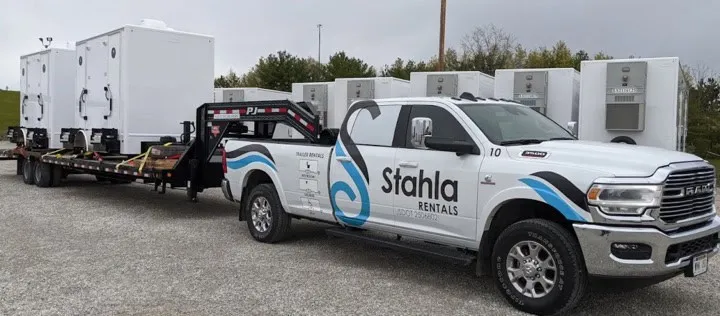
Documentary filmmakers are drawn to Texas for its vast landscapes, unique communities, and compelling stories. From the remote reaches of the Big Bend region to isolated ranches in the Panhandle, documentary production often takes small crews to locations far from any infrastructure. These remote shoots present distinct challenges for basic needs like restroom facilities—challenges that require thoughtful planning and the right equipment to solve.
The Reality of Remote Documentary Production
Documentary crews differ significantly from narrative film or commercial production teams. Where a feature film might bring 100 people to a location, a documentary crew often numbers just three to eight—a director, cinematographer, sound recordist, and perhaps a producer or production assistant. This compact size creates different facility needs than larger productions.
Yet the remote locations that attract documentary filmmakers often lack any existing infrastructure. A rancher’s property 50 miles from the nearest town, a border community accessible only by unpaved roads, or a wilderness area with no development for miles—these locations offer no convenient restroom options for crews working long days.
Self-contained restroom trailers solve this problem by bringing complete facilities to wherever your shoot takes you. With onboard water tanks, waste containment, and power capability, these units operate independently of any external utilities.
Unique Challenges of Texas Remote Locations
Texas remote locations present specific challenges that affect facility planning. Distance from services means you can’t easily get additional supplies or emergency support. Terrain ranges from rocky desert to sandy coastal plains to hilly brush country, each creating different access challenges.
Climate extremes in remote Texas areas are often more pronounced than in urban settings. West Texas desert locations see temperatures exceeding 110°F in summer. The Panhandle can drop below zero in winter. These conditions demand facilities built to handle extremes and equipped with appropriate climate control.
Access roads to remote locations may be unpaved, rough, or barely passable. Facility delivery requires vehicles capable of reaching your location, and some destinations may require special arrangements for equipment transport.
Facility Options for Small Crews
Documentary crews’ smaller size means facility needs differ from larger productions. A crew of five doesn’t need the multi-station trailers appropriate for 150-person productions. More compact units often provide the right balance of capability and practicality for documentary work.
Single-station or small multi-station units offer adequate capacity for typical documentary crews while being easier to transport and position in challenging locations. These units can often reach places that larger trailers cannot access.
However, even small crews benefit from quality facilities during long remote shoots. Comfort affects morale and performance, and working far from civilization makes people appreciate good facilities more, not less. Don’t assume small crew size means you can compromise on facility quality.
Self-Contained Operation Requirements
Remote locations require truly self-contained facilities. Your restroom trailer must carry enough fresh water for the duration of your shoot between service visits. Waste containment capacity must match water supply and anticipated usage. Power for climate control, lighting, and water systems needs to come from the unit itself or a generator you provide.
Calculate your water and waste capacity needs based on crew size and duration between potential service. A three-person crew shooting for one day has different needs than a five-person crew working three consecutive days between servicing opportunities.
Generator requirements depend on climate conditions. Air conditioning in Texas heat draws significant power. Ensure your power solution—whether integral to the trailer or separately provided—can maintain comfortable temperatures throughout your shooting days.
Climate Control in Extreme Conditions
Texas remote areas often experience climate extremes that make facility climate control essential. Big Bend region summer temperatures regularly exceed 100°F and can approach 115°F. Even in moderate seasons, remote areas without shade create challenging heat conditions.
Winter presents opposite challenges in parts of Texas. Panhandle locations can see significant cold, and even areas further south experience occasional freezing conditions. Facilities need heating capability and freeze protection for plumbing systems.
Our restroom trailers feature climate control systems designed for Texas extremes. Proper insulation, efficient HVAC systems, and freeze-protected plumbing ensure facilities remain functional regardless of exterior conditions.
Accessibility Considerations
Even small documentary crews should consider accessibility. Our ADA-compliant restroom trailers are available in sizes appropriate for documentary production and ensure your shoot can accommodate any crew member’s needs.
Remote terrain presents additional accessibility challenges. Ensure accessible units can be positioned on level ground with clear approach paths. Sandy, rocky, or uneven terrain may require advance site preparation to establish truly accessible facility access.
If your documentary involves subjects with disabilities, appropriate accessible facilities become even more important. Plan facility needs based on everyone who will be on location during your shoot.
Logistics for Remote Delivery
Getting facilities to remote locations requires careful logistics planning. Standard delivery trucks may not be able to reach extremely remote sites. Unpaved roads, low-water crossings, and steep grades all affect delivery options.
Communicate detailed location information when arranging delivery. GPS coordinates, road conditions, gate codes or access requirements, and any obstacles or limitations help ensure successful delivery. Photos or video of the access route can help delivery drivers prepare appropriately.
Allow extra time for remote deliveries. What takes two hours in urban areas might take four or more reaching remote destinations. Build this time into your production schedule to avoid day-of complications.
Service Planning for Extended Shoots
Documentary shoots often extend over multiple days or weeks, requiring service planning that accounts for remote access challenges. Standard daily service may not be possible or practical for truly remote locations.
Size your facilities for the duration between realistic service opportunities. If service vehicles can only reach your location every three days, ensure your equipment has capacity for that full period. Oversizing slightly provides a safety margin against unexpected usage or schedule changes.
Establish emergency contact procedures for urgent needs. Equipment issues can’t always wait for scheduled service. Know how to reach your provider and what options exist for urgent attention in remote areas.
Budget Considerations for Documentary Production
Documentary budgets typically run leaner than narrative productions, requiring careful resource allocation. Facility costs should be balanced against your overall production budget while still meeting essential needs.
Remote delivery and service adds costs compared to urban locations. Longer travel distances for delivery vehicles and service crews translate to higher fees. Factor these additional costs into your location decisions and production budget.
That said, attempting to work remote locations without appropriate facilities creates its own costs—crew discomfort affects productivity, lack of facilities limits shooting hours, and inadequate sanitation creates health and morale problems. The right facilities pay for themselves in improved production capability.
Working with Landowners and Location Hosts
Documentary shoots often take place on private property where building relationships with landowners matters for access and cooperation. Quality, self-contained facilities demonstrate professionalism and respect for the property.
Self-contained units don’t require connecting to property utilities or using property facilities. This independence often makes landowners more comfortable hosting production crews, particularly for extended shoots.
Discuss facility placement with property owners during location scouting. Identify positions that work for your production while respecting landowner preferences about where equipment can be placed on their property.
Environmental Considerations
Remote Texas locations often involve environmentally sensitive areas—wildlife habitats, watershed zones, or simply beautiful natural settings that your documentary may be there to capture. Responsible facility management protects these environments.
Self-contained restroom trailers with proper waste containment prevent environmental contamination. All waste is captured and transported for proper disposal, leaving no trace at your shooting location.
Position facilities appropriately to protect sensitive areas. Keep units away from waterways, vegetation that might be damaged, or wildlife areas. Practice leave-no-trace principles that preserve the locations you’ve been privileged to access.
Support Your Remote Documentary Production
Quality restroom facilities make remote documentary production practical by solving the fundamental challenge of basic crew needs in areas without infrastructure. The right equipment, properly planned and delivered, allows you to focus on capturing your story rather than worrying about logistics.
Our experience serving Texas productions includes remote locations throughout the state—from Big Bend to the Panhandle, from coastal barrier islands to isolated ranches. We understand the challenges of remote delivery and can help you plan appropriate facilities for your specific documentary project.
Ready to discuss restroom solutions for your remote Texas documentary production? Contact us today for a consultation that addresses your specific location challenges and crew needs.