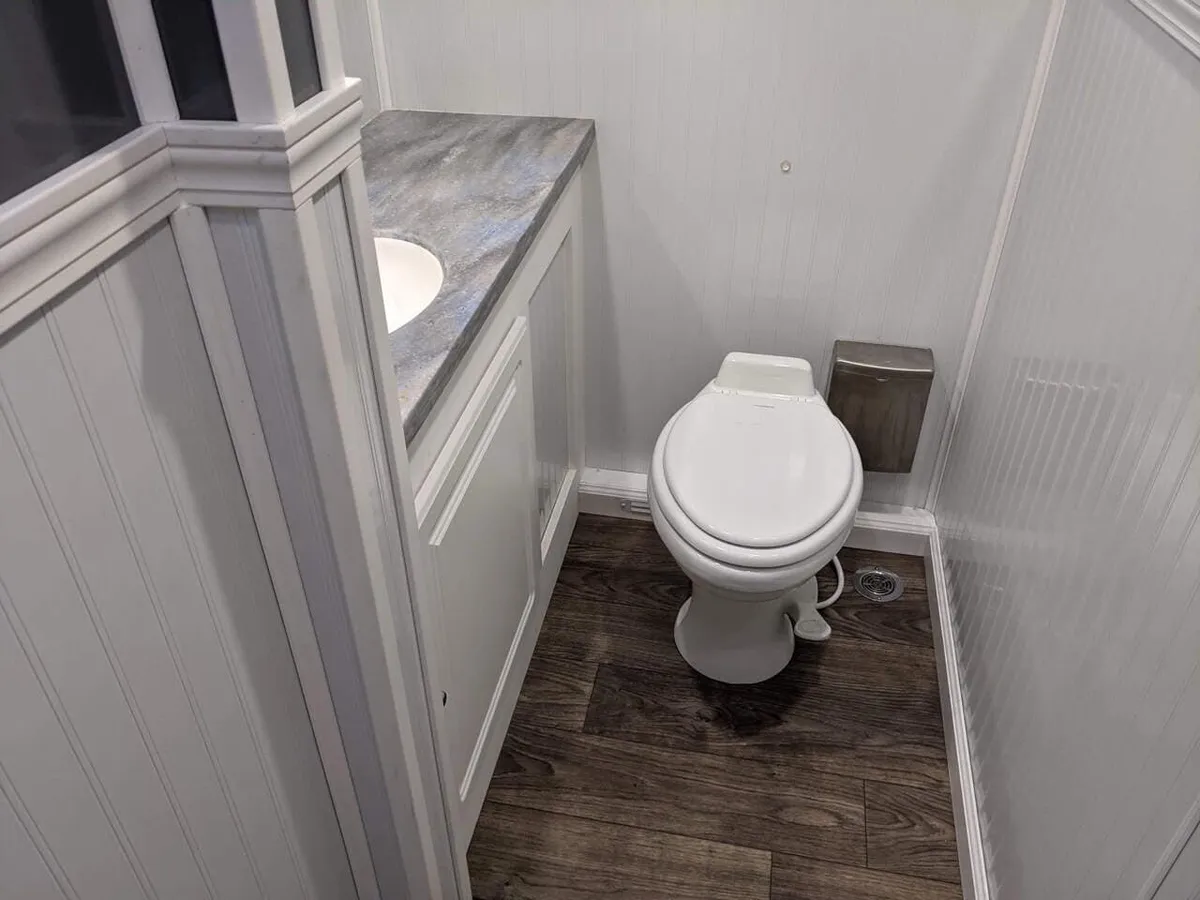
Active drilling operations represent the most intensive workforce activity in Texas oil and gas production. Rigs operating 24 hours a day, seven days a week require comprehensive sanitation facilities that serve multiple shifts in challenging conditions. From remote West Texas locations to sites across the Eagle Ford and Haynesville plays, drilling contractors must provide restroom trailers that meet regulatory requirements, withstand harsh conditions, and support the workforce that keeps Texas drilling.
Understanding Drilling Operation Workforce Patterns
Drilling operations employ continuous crews working 12-hour shifts, typically rotating on schedules such as 14 days on, 14 days off. At any given time, one full crew operates the rig while another rests. Total daily workforce at an active rig typically ranges from 30-50 workers when accounting for drilling crew, support personnel, service company workers, and supervision.
Shift changes create concentrated demand for restroom facilities. As one crew ends their shift and another begins, nearly the entire workforce may need facility access within a short window. Sizing facilities for these peak periods prevents frustrating delays that affect crew transitions.
Break periods during shifts also create usage peaks. Workers taking scheduled breaks tend to cluster, creating temporary demand spikes. Understanding these patterns helps position and size facilities appropriately.
OSHA Requirements for Drilling Sites
Drilling operations fall under OSHA construction sanitation standards, requiring adequate toilet facilities based on workforce size. For sites with 20-200 workers, regulations require one toilet and one urinal per 40 workers. These minimums establish baseline compliance, though quality operators typically exceed these numbers.
Handwashing requirements mandate potable running water, soap, and single-use towels or hand dryers. This requirement proves particularly important on drilling sites where workers handle drilling fluids, lubricants, and other materials requiring thorough handwashing. Restroom trailers with integrated sinks provide compliance without additional equipment.
ADA-compliant restroom trailers should be available at drilling sites where workers with disabilities may be employed or where site visitors may require accessibility. Administrative areas and accessible work locations should include appropriate facilities.
Climate Control: Non-Negotiable for Texas Drilling
Texas drilling operations face extreme temperature conditions that make climate-controlled facilities essential rather than optional. Summer temperatures routinely exceed 100 degrees, with some regions reaching 110 degrees or higher. Standard portable toilets in these conditions become dangerous—interior temperatures can exceed 140 degrees.
Workers already heat-stressed from outdoor rig work desperately need cool environments during breaks. Air-conditioned restroom trailers provide this relief while encouraging proper hydration. Workers who dread entering overheated facilities often limit fluid intake—a dangerous practice in Texas heat conditions.
Winter drilling in northern Texas regions faces freezing temperatures. Heated restroom trailers with freeze protection maintain operation during cold periods. Heat trace systems on plumbing prevent pipe freezing during overnight temperature drops or extended cold snaps.
Self-Contained Operation
Most drilling locations lack utility infrastructure—no water, sewer, or electrical connections exist at remote well sites. Restroom trailers must operate completely self-contained, with onboard freshwater tanks, waste holding systems, and generator power.
Generator sizing must account for climate control demands. Air conditioning during Texas summers requires substantial power draw. Ensure generators have adequate capacity for continuous climate control operation without straining other facility systems.
Water and waste capacity should match anticipated service intervals and usage patterns. Heavy-use facilities may exhaust water supplies or fill waste tanks faster than service schedules allow. Discuss your specific workforce size with providers to ensure appropriate capacity.
Positioning Facilities on the Drill Site
Restroom trailer placement balances accessibility with safety and operational considerations. Position facilities where workers can access them during breaks without excessive travel, but away from active rig operations, heavy equipment paths, and hazardous areas.
Consider wind direction when positioning facilities. Locating trailers upwind from major dust and traffic areas reduces dust accumulation and maintains cleaner facilities. However, don’t position facilities where they might be upwind of living quarters during normal wind conditions.
Rig camps typically cluster support facilities—living quarters, dining facilities, and restrooms—in designated areas away from the active drilling floor. This arrangement supports efficient break management while maintaining appropriate separation from operations.
Serving Multiple Crews and Visitors
Active drilling sites host various personnel beyond the core drilling crew. Service company workers perform specialized functions—cementing, logging, directional drilling, mud engineering—often bringing their own crews for specific operations. Facility capacity must accommodate these additional workers during intensive service activities.
Company representatives, inspectors, and visitors access drilling sites regularly. Professional restroom facilities create positive impressions that reflect on the entire operation. Quality facilities demonstrate attention to standards throughout drilling activities.
Consider separate facilities for different site areas if workforce distribution spans significant distances. Workers shouldn’t need to travel across the entire site for restroom access when facilities could be positioned closer to their work areas.
Night Operations and Lighting
Drilling continues around the clock, requiring 24-hour facility access. Night crews need well-lit paths to restroom facilities and adequate interior lighting for safe use. Remote locations may be completely dark beyond the rig lighting.
Restroom trailers include interior lighting powered by the same systems supporting climate control. Exterior approach lighting improves safety for workers navigating to facilities. Consider solar-powered or hard-wired exterior lights for the path from living quarters to facilities.
Emergency lighting provisions ensure facility access even during generator problems. Battery backup systems maintain basic lighting when primary power fails, allowing safe facility use until power is restored.
Service Logistics for Remote Locations
Remote drilling locations present service challenges. Service vehicles must travel significant distances to reach well sites, potentially an hour or more from their base. Access roads may be unpaved and subject to weather-related access problems.
Establish service relationships before drilling begins. During active drilling periods, service providers in busy oil and gas regions may have limited availability. Advance arrangements ensure priority service throughout your operation.
Service frequency depends on workforce size and facility capacity. Active drilling operations typically require twice-weekly service to maintain hygiene standards. Heavy-use periods during intensive operations may require more frequent attention.
Contractor Coordination
Drilling operations involve multiple contractors—the drilling contractor, various service companies, and operator personnel. Clear understanding of facility responsibilities prevents gaps and conflicts. Typically, the drilling contractor provides facilities for rig crews, with expectations for service company workers clarified in contracts.
Communicate facility locations and rules to all personnel accessing the site. Workers from different companies should understand where facilities are located and expectations for proper use. Include facility information in site orientations.
Peak service company presence—during cementing operations, logging runs, or completion preparation—creates highest facility demand. Plan capacity for these intensive periods rather than normal drilling crew requirements alone.
Dust and Environmental Management
Drilling sites generate substantial dust from vehicle traffic, equipment movement, and wind. This dust affects everything on site, including restroom facilities. Enclosed trailers with filtered climate control maintain cleaner interiors than open facilities.
More frequent cleaning may be necessary during particularly dusty conditions. Discuss dust management with service providers when establishing service schedules. Additional cleaning visits help maintain acceptable conditions during dusty periods.
Environmental compliance requires proper waste disposal from all facilities. Licensed service providers handle waste according to applicable regulations. Documentation of proper disposal protects against environmental liability.
Quality Facilities and Worker Retention
Experienced drilling crews have options in a competitive market. The quality of site accommodations—including restroom facilities—influences where workers choose to work. Contractors providing quality facilities attract and retain experienced crews more effectively.
Climate-controlled restroom trailers demonstrate employer commitment to worker welfare. This visible investment in comfort builds loyalty and supports the crew stability that improves drilling efficiency. In an industry where experienced crews are valuable, facility quality becomes a competitive advantage.
Quality facilities reduce complaints and distractions that supervisors must address. When workers are comfortable with site conditions, they focus on their work rather than facility concerns. This focus translates to better performance and fewer operational disruptions.
Planning Your Drilling Site Restroom Strategy
Successful sanitation planning for Texas drilling operations begins with understanding your operation’s specific requirements—workforce size, shift patterns, location conditions, and service company activity levels. Calculate peak demand rather than average usage to ensure adequate capacity.
Working with experienced Texas restroom trailer providers ensures appropriate recommendations for drilling operations. Providers familiar with oilfield requirements understand remote location logistics, 24/7 operation demands, and the climate control capabilities essential for Texas drilling.
Quality restroom facilities support the workforce that powers Texas drilling. The investment in proper sanitation demonstrates commitment to worker welfare while maintaining the productive conditions that efficient drilling requires. Request a quote today to discuss restroom trailer solutions for your Texas drilling operation.