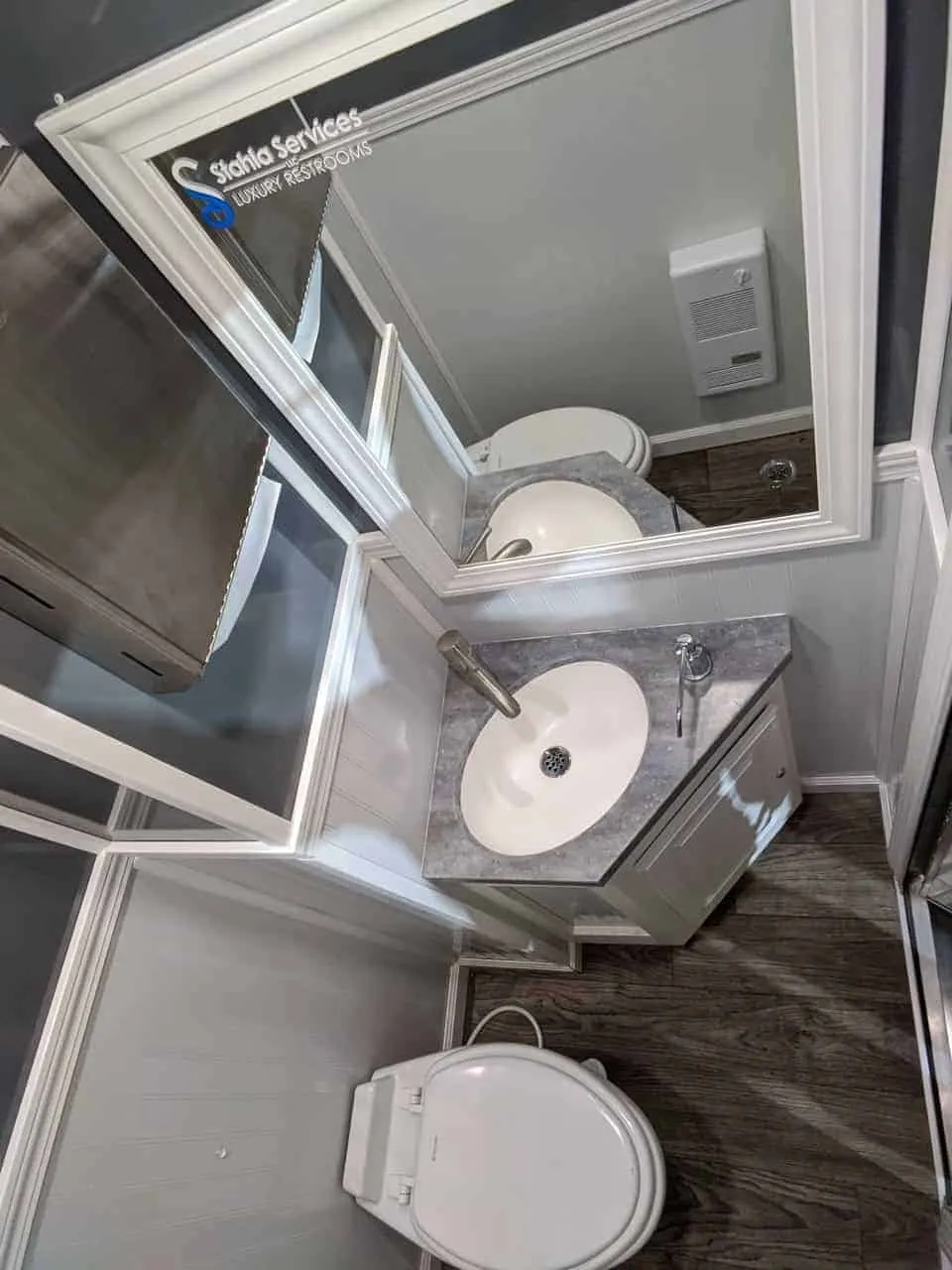
Environmental consciousness increasingly influences event planning decisions in Texas. For organizations and individuals committed to sustainability, eco-friendly restroom trailer options provide quality facilities while minimizing environmental impact. This guide explores sustainable features and practices available in modern restroom trailer rentals.
Water Conservation Features
Water conservation matters especially in Texas, where drought conditions periodically affect much of the state. Modern restroom trailers incorporate several water-saving technologies:
Low-Flow Fixtures
High-efficiency toilets use significantly less water per flush than standard models—often 1.28 gallons or less compared to older 3.5-gallon designs. Over the course of an event with hundreds of uses, this adds up to substantial water savings.
Low-flow faucets with aerators maintain comfortable water pressure while reducing flow rates. Sensor-activated faucets prevent water waste from taps left running.
Greywater Systems
Some advanced restroom trailers separate greywater (from sinks) from blackwater (from toilets). Greywater can potentially be reused for toilet flushing or landscape irrigation, though local regulations govern these applications. Even when greywater isn’t reused, separation simplifies waste processing.
Smart Water Management
Water-level monitoring systems help optimize tank usage. Rather than filling tanks to capacity for every event, these systems help match water supply to actual expected usage—reducing waste while ensuring adequate supply.
Energy Efficiency
Restroom trailers require power for lighting, climate control, and water systems. Reducing energy consumption lowers both environmental impact and operational costs.
LED Lighting
LED fixtures use a fraction of the energy required by traditional incandescent or fluorescent lighting. They also generate less heat, reducing cooling loads in climate-controlled trailers. Most modern restroom trailers have transitioned entirely to LED technology.
Efficient Climate Control
High-efficiency HVAC units maintain comfortable temperatures while minimizing energy consumption. Proper insulation keeps climate-controlled air inside, reducing the work required from heating and cooling systems.
In moderate Texas weather (spring and fall), trailers may operate with just ventilation rather than full air conditioning or heating, substantially reducing energy use.
Solar Options
Some restroom trailers offer solar panel systems that offset or eliminate generator requirements for basic operations. While solar alone may not power climate control during Texas summer heat, it can handle lighting, ventilation, and water pumps—reducing overall fuel consumption.
Solar-powered trailers work best for daytime events with moderate temperatures or for supplementing generator power during extended events.
Sustainable Materials and Construction
The materials used in restroom trailer construction affect their long-term environmental footprint:
- Durable construction: Trailers built to last reduce replacement frequency and associated manufacturing impacts
- Recyclable components: Aluminum framing, steel chassis, and other recyclable materials
- Low-VOC finishes: Interior finishes with reduced volatile organic compounds for better air quality
- Sustainable wood alternatives: Composite materials or sustainably sourced wood for interior features
When evaluating rental providers, ask about their fleet age and maintenance practices. Well-maintained older trailers often have lower lifecycle environmental impact than frequently replaced equipment.
Eco-Friendly Consumables
The supplies stocked in restroom trailers offer opportunities for environmental improvement:
Paper Products
- Recycled-content toilet paper and paper towels
- Bamboo-based paper products (rapidly renewable resource)
- Unbleached or chlorine-free processing
- Compact roll formats that reduce packaging waste
Hand Soap and Sanitizers
- Biodegradable formulations
- Phosphate-free options
- Plant-derived ingredients
- Concentrated formulas in refillable dispensers
Discuss consumable options with your rental provider. Many companies can accommodate requests for eco-friendly products, especially with advance notice.
Waste Processing and Disposal
How waste is handled after leaving the trailer affects overall environmental impact:
Proper Treatment
Reputable rental companies dispose of waste at licensed treatment facilities where it’s properly processed before any discharge. This protects waterways and groundwater from contamination.
Composting Options
Some specialized trailers use composting toilet systems that transform waste into usable compost. These systems work best for certain event types and require specific conditions, but they represent the most environmentally progressive option available.
Tank Treatment Products
Traditional holding tank chemicals use formaldehyde-based compounds. Environmentally preferable alternatives use enzyme-based or biocide-free formulations that break down waste naturally and are safer for treatment facilities to process.
Generator Alternatives and Efficiency
Generators represent the primary carbon footprint of restroom trailer operation. Several approaches reduce this impact:
Shore Power Connection
Whenever possible, connecting to venue electrical power eliminates generator emissions entirely. Even if venue power comes from the grid, it’s typically cleaner than on-site diesel or gasoline generation.
Propane Generators
Propane burns cleaner than diesel or gasoline, producing fewer emissions per kilowatt generated. Propane generators also run quieter, improving the guest experience.
Right-Sized Equipment
Matching generator capacity to actual needs prevents the inefficiency of oversized equipment running below optimal load. An efficient generator running at appropriate capacity is greener than an oversized unit idling.
Placement and Access Considerations
How restroom trailers are positioned and accessed affects their environmental integration:
- Minimize site disturbance: Place trailers on established surfaces rather than sensitive areas
- Protect vegetation: Use ground protection to prevent damage to grass and landscaping
- Manage runoff: Position to prevent any spillage from reaching waterways
- Reduce driving: Strategic placement minimizes guest travel distances and associated impacts
Questions to Ask Your Rental Provider
When prioritizing environmental performance, ask potential providers:
- What water conservation features do your trailers include?
- Are LED lighting and efficient HVAC systems standard?
- Do you offer solar-powered or solar-supplemented options?
- Can you provide eco-friendly consumables?
- What waste treatment methods does your disposal facility use?
- Do you use environmentally preferable holding tank treatments?
- Can we connect to venue power instead of using a generator?
Providers experienced with environmentally conscious clients will answer these questions readily and may suggest additional green options.
Green Event Certification
If your event seeks green certification (such as ISO 20121 or similar standards), restroom facilities are part of the evaluation. Document your eco-friendly restroom choices as evidence of sustainable event management.
Key documentation includes specifications of water-saving and energy-efficient features, eco-friendly consumable choices, and waste disposal practices.
ADA and Accessibility
Environmental responsibility and accessibility go hand in hand. ADA-compliant restroom trailers ensure all guests can access facilities regardless of ability. Sustainable practices shouldn’t compromise accessibility—the best solutions address both concerns.
Making Sustainable Choices
Every event presents opportunities to reduce environmental impact. While restroom facilities may seem like a small piece of overall event sustainability, thoughtful choices add up—especially for organizations hosting multiple events annually or festivals with large attendance.
Ready to explore eco-friendly restroom trailer options for your Texas event? Request a quote and let us know about your sustainability priorities. We’ll help identify options that align with your environmental values while meeting all your practical needs.