Independent filmmakers face the constant challenge of stretching limited budgets to achieve professional results. Every dollar matters when you’re financing a passion project or working with modest investor funding. Restroom facilities might seem like a minor line item, but inadequate planning can create problems that cost far more than proper facilities would have. This guide helps indie producers understand realistic facility costs and strategies for managing this essential budget category effectively.
Why Facility Planning Matters for Indie Films
Independent productions often try to minimize or eliminate facility costs, hoping to rely on location bathrooms, nearby businesses, or informal arrangements. While understandable from a budget perspective, this approach creates risks that can ultimately cost more than proper facilities.
Crew morale suffers when basic needs aren’t met. Uncomfortable, unhappy crew members work less efficiently and may not return for future projects. Your reputation as a producer depends partly on how you treat your team, even on low-budget shoots.
Location relationships can sour when crews overuse property owner facilities or create problems by lacking their own. Lost location access during production creates expensive delays and potentially compromises your film.
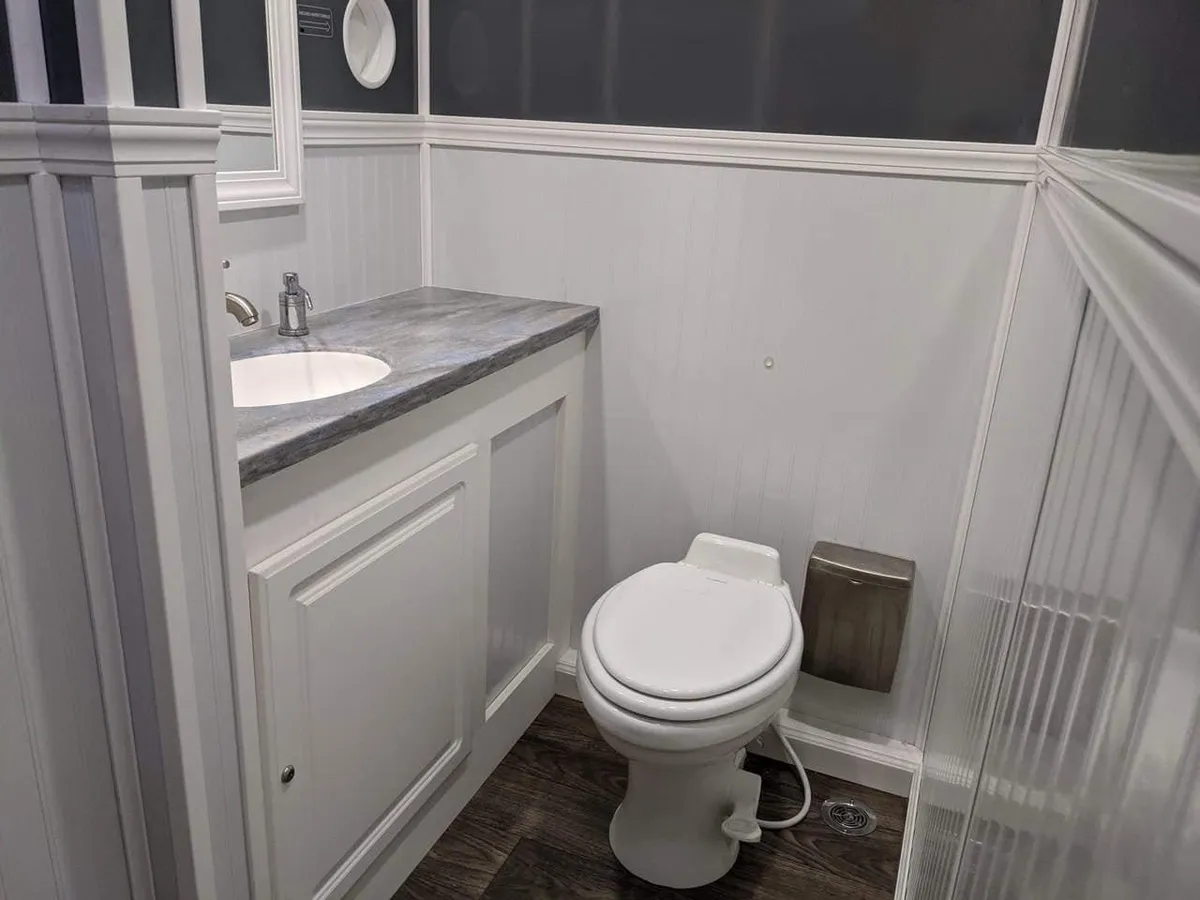
Professional restroom trailers solve these problems while demonstrating to cast, crew, and locations that you run a legitimate production despite budget constraints.
Understanding Indie Film Budget Realities
Independent films operate across a wide budget spectrum. Micro-budget productions under $100,000 face the tightest constraints. Low-budget films in the $100,000 to $1 million range have more flexibility but still require careful allocation. Even films approaching studio indie budgets of several million dollars must justify every expenditure to investors and completion bond companies.
Facility costs typically fall under the production or locations department budget, depending on your production structure. Standard industry guidance suggests allocating 1-2% of your total budget for sanitation facilities, though actual needs vary based on crew size, shoot length, and location types.
A 20-day shoot with 25 crew members has different facility needs than a 12-day shoot with 40 crew members. Your specific production parameters drive appropriate facility investment.
Facility Cost Components
Understanding what goes into facility costs helps you budget accurately. The main components include rental fees for the equipment itself, delivery and pickup charges, ongoing service fees for cleaning and waste removal, and any additional charges for climate control, generators, or special requirements.
Rental fees typically structure as daily or weekly rates. For shoots lasting more than a few days, weekly rates usually provide better value. Monthly rates for longer productions offer even better per-day costs.
Delivery and pickup represent one-time charges per deployment. If your production moves between locations, you may incur multiple delivery charges unless you can move facilities with your production.
Service fees cover regular cleaning, waste removal, and supply restocking. Standard service is typically daily for productions, though smaller crews or shorter days might require less frequent attention.
Crew Size and Facility Calculations
The number of people on set directly affects facility requirements. Regulatory baselines suggest one toilet per 20 workers, but practical experience often calls for higher ratios to prevent lines and maintain facility quality.
Typical indie crews range from 15 to 40 people depending on the production’s scope and budget. A minimal 15-person crew technically requires just one facility, but two provides redundancy and separates cast from crew if needed.
Larger indie crews of 30-40 people need at least two facilities, with three providing more comfortable capacity. Consider your typical day—meal breaks when everyone needs access simultaneously create peak demand that exceeds average usage calculations.
Location-Based Cost Variations
Where you shoot affects facility costs significantly. Urban locations in major Texas cities typically have lower delivery costs due to proximity. Remote locations incur higher delivery fees for longer travel distances.
Some locations have existing facilities that can reduce your portable facility needs. Studio stages typically have permanent restrooms. Business or home locations may allow limited crew access to existing facilities, supplemented by portable units for larger crews or longer days.
Exterior locations without any existing facilities require you to provide everything your crew needs. Budget accordingly when planning shoots at parks, ranches, or other locations without infrastructure.
Strategies for Managing Facility Costs
Several strategies help independent productions manage facility costs without compromising crew welfare. Choosing locations with existing facilities can reduce or eliminate portable restroom needs for some shoot days. Scheduling efficiently to minimize total shoot days reduces overall facility rental periods.
Negotiating package deals that bundle multiple services—rental, delivery, and service—often provides better pricing than itemizing each component separately. Ask providers about indie film rates or weekly discounts that might apply to your production.
Sharing facilities with other productions shooting in the same area occasionally presents opportunities, though coordination challenges often outweigh potential savings.
Accessibility on Indie Budgets
ADA compliance isn’t optional regardless of budget level. Independent productions must provide accessible facilities for any cast or crew members with disabilities. Our ADA-compliant restroom trailers meet federal requirements while fitting indie budget constraints.
Include at least one accessible unit in your facility plan. If you know someone on your team requires accessible facilities, plan accordingly from the start. If not, having accessible options available protects you from scrambling if needs emerge during production.
Some providers offer accessible units at similar pricing to standard units. Ask about accessibility options when getting quotes—the cost difference may be smaller than you expect.
Climate Control Considerations
Texas weather makes climate control essential for restroom facilities during much of the year. Summer shoots require air-conditioned facilities—there’s no practical alternative when temperatures exceed 100°F. Winter shoots in colder parts of Texas need heated units to remain functional.
Climate-controlled units typically cost somewhat more than basic units, but the difference is often smaller than expected. The modest additional cost provides substantial crew comfort improvement that supports productivity throughout your shoot.
Factor climate control into your budget from the start rather than treating it as an optional upgrade. In Texas conditions, it’s effectively a requirement for professional production.
Building Facility Costs into Your Budget
Include facility costs as a specific line item in your production budget, not as an afterthought hidden in contingency. This ensures the money is allocated and available when needed.
Get actual quotes during pre-production rather than estimating based on assumptions. Provide prospective vendors with your crew size, shoot dates, and location information to receive accurate pricing for your specific production.
Include modest contingency for facility-related needs—unexpected schedule extensions, additional units for high-crew-count days, or service frequency adjustments. A 10-15% contingency on facility budget provides reasonable protection.
Quality vs. Cost Trade-offs
The lowest-cost option isn’t always the best value for independent productions. Unreliable equipment, inconsistent service, or uncomfortable facilities create problems whose costs exceed the savings from choosing cheaper options.
Focus on value rather than minimum price. Quality facilities from reliable providers prevent the disruptions and morale issues that can derail tight production schedules. The slightly higher cost of professional equipment pays dividends in smooth operations.
That said, you don’t need luxury facilities for every indie production. Match facility quality to your production’s overall standards. A straightforward drama doesn’t need the premium facilities appropriate for a production hosting major talent with specific contractual requirements.
When to Invest More in Facilities
Certain situations justify investing more in facilities than minimum requirements suggest. Productions with recognizable talent benefit from professional facilities that meet actor expectations. Shoots in challenging conditions—extreme heat, remote locations, extended days—warrant better facilities to maintain crew capability.
Long shoots where facility costs represent a smaller percentage of total budget can justify upgrading to better equipment without significantly impacting overall finances. A 40-day shoot might benefit from the morale improvement of quality facilities more than the modest cost savings of basic units.
Consider the impression you want to make on investors, completion bond companies, or distribution partners who may visit set. Professional facilities support professional perceptions of your production.
Support Your Independent Production
Quality restroom facilities are achievable on independent film budgets with proper planning. Understanding your actual needs, getting accurate quotes, and budgeting appropriately ensures you can provide professional facilities without breaking the bank.
We work with independent productions throughout Texas and understand the budget constraints that define indie filmmaking. Our team can help you plan appropriate facilities for your specific production, crew size, and budget parameters.
Ready to discuss restroom solutions for your independent film? Contact us today for a quote that fits your production’s needs and budget.