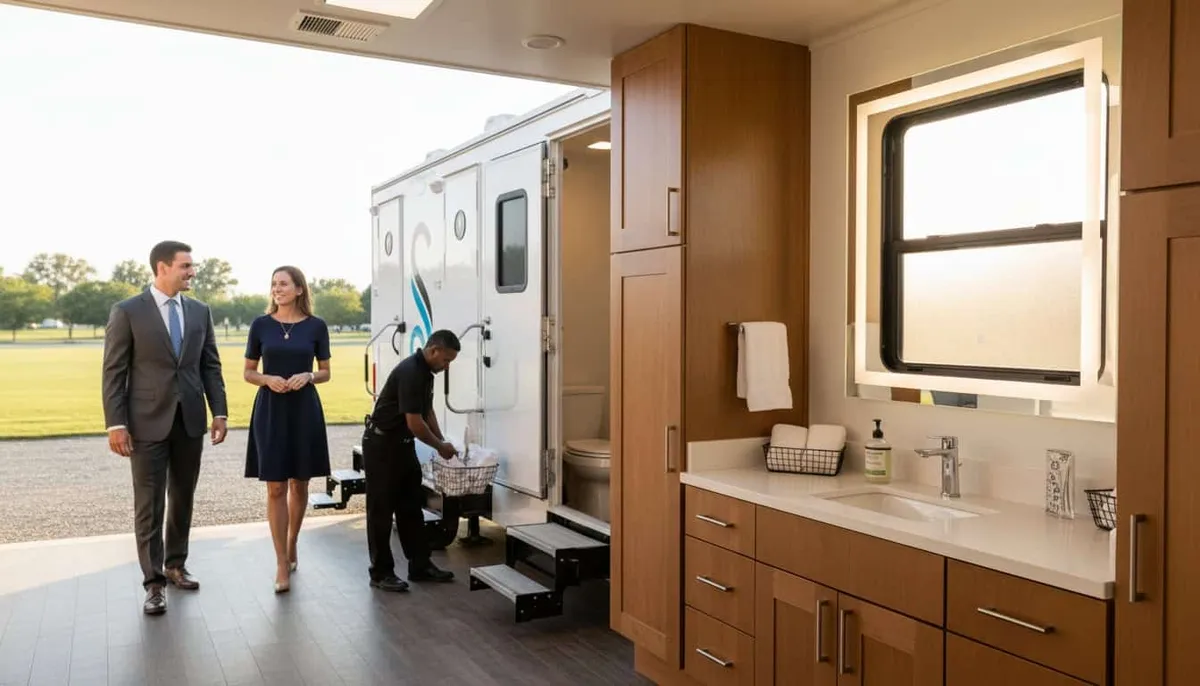
Major construction projects in Texas often span months or even years, creating unique challenges for providing worker sanitation facilities. Long-term construction restroom planning requires a different approach than short-term event rentals, with considerations for changing workforce sizes, seasonal weather variations, and evolving site layouts. Restroom trailers have become the preferred solution for extended construction projects, offering durability, comfort, and flexibility that traditional portable toilets cannot match over extended periods.
Understanding Long-Term Construction Project Dynamics
Construction projects spanning multiple months experience significant workforce fluctuations. Early site preparation phases might involve crews of 20-30 workers focused on earthwork, utilities, and foundation preparation. As vertical construction begins, workforce numbers often double or triple, reaching peak levels during the most active building phases.
Understanding these workforce curves helps project managers plan restroom capacity that grows with the project. Starting with adequate capacity for initial phases while establishing arrangements for adding units during peak periods prevents both initial overspending and mid-project scrambles for additional facilities.
Texas weather patterns also influence long-term planning. Projects starting in spring will experience the intense summer heat before reaching completion. Those beginning in fall must prepare for potential winter cold snaps. Climate-controlled restroom trailers handle these seasonal transitions, maintaining worker comfort regardless of when peak workforce periods occur.
Cost-Effective Strategies for Extended Rentals
Long-term rental agreements typically offer better pricing than accumulating short-term rental periods. Discussing project timelines upfront allows rental providers to offer volume discounts and predictable monthly rates. Multi-month commitments often reduce per-unit costs by 15-25% compared to month-to-month arrangements.
Service frequency optimization presents another opportunity for cost management. While new projects often start with weekly service to assess actual usage patterns, adjusting service schedules based on observed demand can reduce costs without compromising hygiene. Some facilities may need twice-weekly service while others require less frequent attention.
Consider total cost of ownership rather than base rental rates alone. Restroom trailers typically include more comprehensive service than portable toilets, with cleaning, restocking, and climate control maintenance included. When comparing options, ensure you’re comparing equivalent service levels and all associated costs.
Scalable Solutions for Changing Workforce Sizes
Flexible rental arrangements accommodate workforce fluctuations without locking project managers into fixed capacity levels. Establishing relationships with rental providers early in the project enables rapid response when additional units are needed and smooth removal when workforce levels decrease.
For projects with predictable workforce curves, discuss anticipated changes during initial planning. Providers can reserve capacity for your peak period needs and schedule deliveries to coincide with workforce expansion. This proactive approach prevents last-minute availability problems during busy construction seasons.
Some Texas contractors maintain a baseline of quality restroom trailers throughout the project, supplementing with additional portable facilities during peak periods. This hybrid approach provides consistent quality for most workers while cost-effectively handling temporary capacity increases.
Site Layout Evolution and Facility Relocation
Construction sites transform dramatically throughout project duration. Areas accessible during early phases may become inaccessible as buildings rise and staging areas shift. Planning for facility relocation ensures workers maintain convenient access to restrooms as site conditions change.
Discuss mobility requirements with your rental provider from the start. Restroom trailers require towing vehicles for relocation, and coordinating moves with construction schedules prevents service interruptions. Some rental agreements include a set number of relocations while others charge per move.
Consider utility connections when planning relocations. If trailers connect to site power and water, each new location requires reconnection. Trailers operating on generator power and onboard water tanks offer greater flexibility but require more frequent service for fuel and water replenishment.
Seasonal Weather Management
Texas construction projects face extreme temperature ranges throughout extended durations. Summer temperatures exceeding 100 degrees demand robust air conditioning systems, while winter cold snaps can freeze pipes in unprotected units. Long-term projects benefit from climate-controlled restroom trailers designed to handle both extremes.
Air conditioning capacity becomes critical during Texas summers. Units with adequate cooling power maintain comfortable interior temperatures even during peak afternoon heat. Undersized climate control systems struggle to maintain comfort, discouraging proper facility usage and affecting worker hydration.
Winter preparations include heated units and freeze protection for plumbing. Some trailers feature heat trace systems on water lines to prevent freezing during cold snaps. Discussing cold weather capabilities before winter arrives ensures uninterrupted service through temperature drops.
ADA Accessibility Throughout the Project
Long-term projects are more likely to employ workers requiring accessible facilities at some point during the construction timeline. Including ADA-compliant restroom trailers from the start ensures immediate accommodation availability when needed, avoiding delays in accommodating workers or visitors who require accessibility features.
Proactive accessibility planning also prepares for site visits by inspectors, clients, or community members who may require accessible facilities. The cost difference between standard and ADA-compliant units is minimal compared to the liability exposure and scheduling disruption from adding accessible facilities mid-project.
Position accessible units on stable, level ground with clear approach paths. As site conditions change, maintain accessibility by adjusting paths or relocating units as needed. Document accessibility provisions as part of your overall project safety planning.
Service and Maintenance for Long-Term Use
Consistent service schedules are essential for maintaining restroom quality throughout extended projects. Establishing regular service days creates predictable maintenance patterns and helps identify issues before they become problems. Weekly service typically works for moderate usage, with adjustments based on actual demand.
Long-term use increases the importance of thorough cleaning beyond basic waste removal. Restroom trailers should receive deep cleaning periodically, with attention to floors, walls, fixtures, and ventilation systems. Discussing deep cleaning frequency during rental negotiations ensures clear expectations for both parties.
Equipment wear becomes a factor over extended rental periods. Reputable providers maintain their equipment and address mechanical issues promptly. Discuss replacement policies for units that experience problems during the rental period. Quality providers stand behind their equipment with responsive service.
Subcontractor Coordination
Major construction projects involve multiple subcontractors, each with their own workers requiring restroom access. Clear agreements about facility usage prevent conflicts and ensure adequate capacity for all workers on site. General contractors typically provide facilities, with costs allocated through subcontract provisions.
Coordinating facility locations considers subcontractor work areas. Multiple restroom locations may be necessary to serve workers across large sites effectively. Discuss placement with major subcontractors during project planning to identify optimal locations that minimize worker travel time.
Peak subcontractor overlap often creates the highest restroom demand. When multiple trades work simultaneously, facility requirements exceed what any single trade would need. Plan for these overlap periods when sizing restroom capacity.
Documentation and Compliance
Long-term projects benefit from comprehensive documentation of sanitation provisions. Maintain rental agreements, service logs, and any communications regarding facility issues. This documentation demonstrates compliance during inspections and provides records for dispute resolution if needed.
Include sanitation planning in project safety documentation. Site safety plans should address restroom locations, service schedules, and procedures for reporting problems. Regular safety meetings can remind workers of proper facility use and maintenance reporting procedures.
Track actual usage patterns to optimize future projects. Noting the relationship between workforce size, facility quantity, and service frequency provides valuable data for planning subsequent construction projects. This institutional knowledge improves efficiency over time.
Building Rental Relationships
Long-term construction projects offer opportunities to build relationships with rental providers that benefit future work. Reliable customers with consistent payment histories often receive preferred pricing and priority service. Establishing these relationships during major projects pays dividends on subsequent work.
Communication with your rental provider should be open and regular. Report issues promptly, provide feedback on service quality, and discuss changing needs as they arise. Providers who understand your operation can better anticipate needs and proactively suggest improvements.
Consider your rental provider a project partner rather than simply a vendor. Their expertise in sanitation logistics can help solve problems and optimize your restroom planning. The best rental relationships involve collaborative problem-solving that benefits both parties.
Planning Your Long-Term Construction Restroom Strategy
Successful sanitation planning for extended Texas construction projects begins with understanding your project’s complete lifecycle. Map anticipated workforce curves, identify seasonal challenges, and plan for site layout evolution. This comprehensive view enables strategic decisions about facility types, quantities, and arrangements.
Working with experienced Texas restroom trailer providers ensures you receive appropriate recommendations for your situation. Local providers understand regional conditions, seasonal patterns, and logistics challenges specific to Texas construction. Their expertise helps optimize your restroom strategy for both cost and worker satisfaction.
Quality restroom facilities contribute to project success through improved worker morale, productivity, and retention. The investment in proper sanitation pays dividends throughout the project duration and establishes your reputation as a contractor who values workforce welfare. Request a quote today to discuss long-term restroom trailer solutions for your Texas construction project.