Maintaining OSHA compliance for restroom facilities on Texas construction sites is not just about avoiding fines—it’s about protecting worker health, maintaining productivity, and demonstrating professional standards. The Occupational Safety and Health Administration sets clear requirements for sanitation on construction sites, and understanding these regulations helps Texas contractors make informed decisions about restroom trailer rentals and portable sanitation solutions.
OSHA Standard 1926.51: The Foundation of Construction Site Sanitation
OSHA Standard 1926.51 establishes minimum requirements for sanitation facilities on construction sites. This regulation applies to all construction employers in Texas and throughout the United States. Understanding these requirements helps ensure compliance while providing adequate facilities for your workforce.
The standard specifies the following minimum toilet ratios: construction sites with 20 or fewer employees require at least one toilet facility. Sites with 20 to 200 workers need one toilet seat and one urinal per 40 workers. For larger sites exceeding 200 workers, the requirement adjusts to one toilet seat and one urinal per 50 workers.
These ratios represent minimums, not recommendations. Texas contractors often exceed these requirements, recognizing that adequate facilities reduce wait times, maintain worker productivity, and demonstrate respect for the workforce. In competitive labor markets, the quality of job site amenities influences worker decisions about which projects to join.
Toilet Facility Requirements Under OSHA
OSHA requires that toilet facilities be adequately ventilated, kept in clean and sanitary condition, and accessible to employees. For construction sites, this means facilities must be serviced regularly to maintain hygiene standards. Neglecting maintenance not only violates regulations but creates health hazards and damages worker morale.
The regulation specifies that facilities should be located reasonably close to work areas. While OSHA doesn’t define a specific maximum distance, industry practice suggests placing facilities within a reasonable walking distance to prevent excessive time away from work tasks. For large construction sites, multiple facility locations may be necessary to meet this requirement.
Privacy requirements mandate that toilet facilities provide protection from the elements and ensure user privacy. Standard portable toilets meet this basic requirement, though restroom trailers offer superior privacy with solid walls, locking doors, and separated stall areas similar to permanent building restrooms.
Handwashing Requirements for Construction Sites
OSHA Standard 1926.51 also addresses handwashing facilities, requiring potable running water, soap, and single-use towels or hand dryers. This requirement proves particularly important on construction sites where workers handle various materials throughout the day, from concrete and chemicals to insulation and finishing products.
Traditional portable toilets typically include hand sanitizer dispensers rather than running water. While hand sanitizer provides some protection, it doesn’t meet OSHA’s requirement for potable running water for handwashing. Construction sites using only portable toilets must provide separate handwashing stations to achieve compliance.
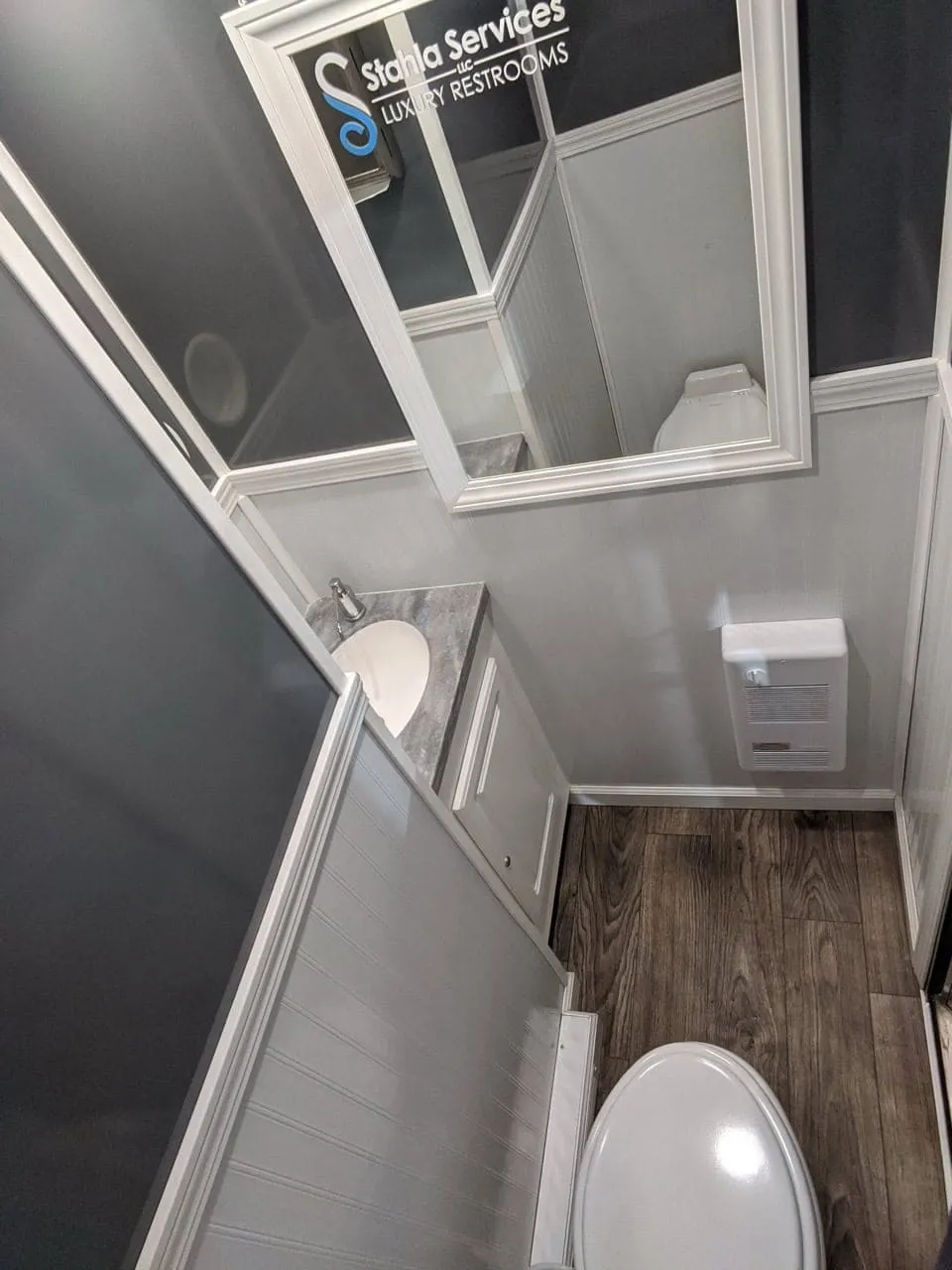
Restroom trailers include integrated handwashing facilities with hot and cold running water, soap dispensers, and paper towel dispensers. These units meet OSHA handwashing requirements without needing additional equipment. The convenience of integrated facilities encourages proper handwashing practices among workers.
ADA Accessibility Requirements
The Americans with Disabilities Act requires accessible restroom facilities when construction site workers require them. While not every site needs ADA-compliant restroom trailers, employers must provide accessible facilities when employing workers with disabilities or when workers sustain injuries requiring temporary accessibility accommodations.
ADA-compliant restroom trailers feature wider doorways, grab bars, adequate turning radius for wheelchair users, and accessible sink heights. Many Texas contractors proactively include ADA-accessible units on all job sites, ensuring immediate accommodation availability for any worker who needs these features.
Planning for accessibility also prepares sites for visits by inspectors, clients, or other individuals who may require accessible facilities. The cost difference between standard and ADA-accessible units is minimal compared to the liability exposure from non-compliance.
Enforcement and Penalties
OSHA enforces construction site sanitation requirements through workplace inspections. Violations can result in citations and penalties ranging from minimal fines for minor issues to substantial penalties for willful or repeated violations. Beyond financial penalties, citations become part of a company’s safety record, potentially affecting bidding opportunities and insurance rates.
Texas construction sites may face OSHA inspection following worker complaints, accidents, or random selection for inspection. Maintaining consistent compliance eliminates the stress of potential inspections and demonstrates professional standards to clients and workers alike.
Common violations include insufficient numbers of facilities, failure to maintain clean conditions, lack of proper handwashing facilities, and inaccessible locations. These violations are easily preventable through proper planning and regular maintenance scheduling.
Exceeding Minimum Requirements: Best Practices
Forward-thinking Texas contractors recognize that OSHA minimums represent the floor, not the ceiling, for worker sanitation. Exceeding minimum requirements improves worker satisfaction, reduces facility wait times, and demonstrates commitment to workforce welfare.
Climate-controlled facilities become essential rather than optional in Texas conditions. Summer temperatures exceeding 100 degrees make traditional portable toilets nearly unbearable, potentially discouraging workers from using facilities and staying properly hydrated. Air-conditioned restroom trailers maintain comfortable conditions year-round.
Consider peak usage patterns when planning facility numbers. Break times and shift changes create concentrated demand for restroom facilities. Providing capacity for peak periods prevents long lines and frustration, even if average usage throughout the day remains lower.
Service and Maintenance Compliance
OSHA’s requirement that facilities remain in clean and sanitary condition necessitates regular service schedules. Texas construction sites typically require weekly service for moderate usage, with high-traffic sites needing twice-weekly attention. Summer heat accelerates waste decomposition and increases odor potential, often requiring more frequent service.
Documenting service visits provides evidence of compliance during inspections. Reputable rental companies provide service records showing dates, work performed, and condition assessments. Maintaining these records protects contractors against claims of neglected maintenance.
Emergency service availability ensures rapid response to unexpected issues. Facilities that malfunction or become unsanitary must be addressed promptly to maintain compliance and worker access. Discuss emergency service provisions when establishing rental agreements.
Documentation and Recordkeeping
Maintaining documentation of sanitation compliance protects Texas contractors during inspections and disputes. Key records include rental agreements specifying facility quantities and service schedules, service logs showing maintenance visits, and any employee communications regarding facility access.
Site safety plans should address sanitation provisions, including facility locations, service schedules, and procedures for reporting problems. Including sanitation in overall safety planning demonstrates systematic attention to worker welfare and regulatory compliance.
Subcontractor coordination becomes important on projects with multiple employers. Clear understanding of which parties provide facilities for which workers prevents gaps in coverage that could create compliance issues for all employers on site.
Special Circumstances and Exceptions
Certain construction situations require additional consideration. Remote locations without road access may need helicopter-delivered facilities or alternative arrangements. Confined space work may require positioning facilities at entry points rather than general work areas. Night shift work requires adequate lighting for safe facility access.
Temporary work of short duration may use facilities in nearby buildings if available and accessible. However, this exception doesn’t apply to most construction projects where permanent or semi-permanent sanitation solutions are practical and appropriate.
Multi-story buildings under construction require facility access on or near working floors. Workers shouldn’t need to travel multiple floors to access restrooms. Crane-lifted facilities or strategic positioning during different construction phases addresses this requirement.
The Business Case for Quality Sanitation
Beyond compliance, quality restroom facilities represent sound business investment. Workers who don’t dread using job site facilities stay properly hydrated, take necessary breaks, and maintain better focus on their tasks. Reduced complaints about facilities means supervisors spend less time addressing worker concerns.
In Texas’s competitive construction labor market, job site conditions influence worker decisions. Companies known for providing quality amenities attract and retain skilled tradespeople more effectively than those offering minimal facilities. The cost difference between basic compliance and quality facilities is minimal compared to recruitment and retention costs.
Client perceptions matter as well. Site visits by owners, architects, or inspectors create impressions of overall project quality. Clean, professional restroom facilities signal attention to detail and professional standards throughout the project.
Getting Compliant on Your Texas Construction Site
Achieving and maintaining OSHA compliance for construction site sanitation starts with proper planning. Calculate facility requirements based on your peak workforce, identify appropriate locations throughout the site, and establish reliable service schedules before workers arrive.
Working with experienced Texas restroom trailer providers ensures you receive appropriate recommendations for your situation. Local companies understand OSHA requirements, Texas conditions, and logistics challenges that affect facility selection and placement.
Don’t wait for an inspection to address sanitation compliance. Proactive planning protects workers, demonstrates professionalism, and eliminates the stress of potential violations. Request a quote today to discuss OSHA-compliant restroom solutions for your Texas construction project.