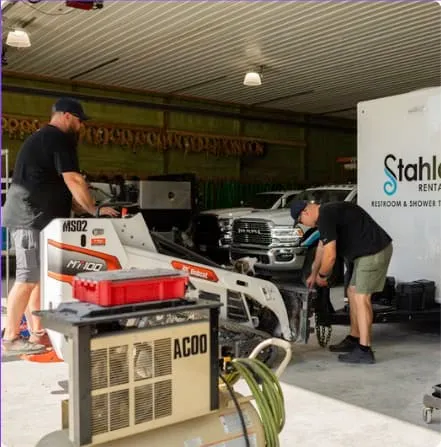
Understanding the power and water requirements for restroom trailers helps you prepare your venue and avoid setup complications. Unlike simple porta potties, restroom trailers are sophisticated facilities that need adequate utilities to function properly. This guide explains what you need and how to ensure your event site can accommodate these requirements.
Electrical Requirements: What Powers a Restroom Trailer
Restroom trailers use electricity for multiple systems. Understanding each component helps explain the overall power needs.
Climate Control
Air conditioning represents the largest electrical draw in a restroom trailer. In Texas, where summer temperatures regularly exceed 100°F, functioning AC isn’t optional—it’s essential for guest comfort and safety. Heating systems draw less power but still contribute to overall electrical needs during winter events.
A single air conditioning unit typically requires 15-20 amps when running. Larger trailers with multiple AC units proportionally increase power requirements.
Lighting
Interior and exterior lighting ensures guests can safely use facilities at any hour. Most modern trailers use LED lighting, which is energy-efficient but still requires power. Expect lighting to draw 2-5 amps depending on the trailer’s lighting configuration.
Water Systems
Electric water pumps push water from holding tanks through the plumbing system. Water heaters, when equipped, provide hot water for handwashing. These systems together may draw 5-10 amps.
Ventilation
Exhaust fans maintain air quality inside the trailer. While individually small draws, ventilation fans run continuously and contribute to overall power needs.
Total Power Requirements by Trailer Size
Trailer power requirements vary based on size, features, and number of climate control units. Here are typical ranges:
- Small 2-station trailers: 20-30 amp service
- Medium 4-station trailers: 30-50 amp service
- Large 6+ station trailers: 50-100 amp service
- Luxury trailers with premium features: 50-100 amp service
- ADA-compliant trailers: 30-50 amp service
Your rental provider will specify exact amperage requirements for your specific trailer. Don’t guess—confirm requirements before your event.
Power Source Options
Venues have several options for providing power to restroom trailers:
Venue Electrical Connection
Some venues have outdoor electrical panels with adequate capacity. This is common at established event venues, parks with permanent facilities, and properties with agricultural or commercial infrastructure.
To use venue power, you need:
- A dedicated circuit with sufficient amperage
- Appropriate outlet type (typically 30-amp or 50-amp twist-lock)
- Extension cord rated for the required amperage and distance
- GFCI protection as required by code
Confirm venue electrical capacity before relying on this option. Many venues that appear to have outdoor power don’t have adequate amperage for restroom trailers with air conditioning.
Generator Rental
Generators are the most common power solution, especially for venues without electrical infrastructure. They provide complete energy independence and work at any location.
Generator sizing for restroom trailers:
- Small trailers (20-30 amp): 3,500-5,000 watt generator
- Medium trailers (30-50 amp): 5,000-7,500 watt generator
- Large trailers (50+ amp): 7,500-12,000 watt generator
Many restroom trailer rental companies offer generator rental as part of their service. This simplifies logistics since they handle sizing, delivery, and fueling.
Onboard Generators
Some restroom trailers come equipped with built-in generators. These units are pre-sized for the trailer’s requirements and installed to minimize noise. While convenient, trailers with onboard generators typically cost more to rent.
Generator Placement and Noise
Generator placement matters for both function and guest experience. Consider:
- Distance from event activities: Place generators 50-100 feet from ceremony and reception areas to minimize noise disruption
- Ventilation: Generators need airflow for cooling and exhaust; never enclose them completely
- Fuel access: Position for easy refueling if your event runs long
- Safety: Keep away from foot traffic and tent walls
Quiet generators designed for event use produce less noise than standard construction generators. If noise is a concern, ask about quiet generator options.
Water Requirements: Freshwater Systems
Restroom trailers need freshwater for flushing toilets and handwashing. Understanding capacity and consumption helps you plan for your event’s needs.
Onboard Tank Capacity
Most restroom trailers include freshwater holding tanks. Typical capacities range from 100 to 300 gallons depending on trailer size. These tanks are filled before delivery or upon arrival at your venue.
For most single-day events with normal usage patterns, onboard tanks provide sufficient capacity without mid-event refilling. A 200-gallon tank typically serves 100-150 guests for a 4-6 hour event.
Water Consumption Estimates
Average water consumption per restroom use runs approximately 1-2 gallons, including flushing and handwashing. This varies based on:
- Toilet flush mechanism (high-efficiency vs. standard)
- Handwashing duration
- Faucet flow rates
- Guest behavior patterns
For planning purposes, estimate 1.5 gallons per use and multiply by expected uses (guest count times average visits per person).
Continuous Water Supply Options
For multi-day events, high-usage situations, or when onboard capacity may not suffice, consider:
- Garden hose connection: Many trailers can connect directly to venue water supplies via standard garden hose. This provides unlimited water and eliminates refill concerns.
- Scheduled refilling: Arrange for mid-event water delivery if your venue lacks a water connection. Your rental provider can schedule technician visits.
- Larger capacity trailers: Choose trailers with bigger tanks if you’re uncertain about water access.
Wastewater and Holding Tanks
Restroom trailers store wastewater in holding tanks until pumped out. Tank capacities are designed to handle the wastewater generated from the freshwater supply—if you don’t run out of freshwater, you won’t exceed waste capacity.
For events lasting more than one day, mid-event pumping may be necessary. Your rental provider can arrange scheduled pumping based on expected usage patterns.
Hot Water Considerations
Many restroom trailers include water heaters for comfortable handwashing. These add to both electrical consumption and warm-up time requirements. Water heaters typically require:
- 30-60 minutes to heat water initially
- Continuous power to maintain temperature
- Adequate freshwater supply to function
Hot water is a comfort feature rather than a necessity. If power constraints exist, hot water can sometimes be disabled to reduce electrical requirements.
Site Assessment Questions
When evaluating your venue for restroom trailer placement, answer these questions:
- Is there outdoor electrical service? What amperage?
- Where is the electrical panel relative to trailer placement?
- Is there a water spigot accessible from the trailer location?
- What is the distance from power and water sources to the placement area?
- Are there any venue restrictions on generator use?
- Are extension cord runs protected from foot traffic?
Share this information with your rental provider during the planning process. They’ll advise on equipment needs and potential challenges.
Texas Weather Impact on Utilities
Texas weather extremes affect utility planning:
- Summer heat: Air conditioning must run continuously, increasing power consumption. Hot weather also increases guest hydration and corresponding restroom usage.
- Winter cold: Heating requirements increase power needs. Water lines may need freeze protection for overnight events in cold weather.
- Rain: Generator placement must account for weather protection. Extension cords need appropriate outdoor ratings.
Plan utility capacity for worst-case weather conditions, not ideal conditions.
Let Your Provider Handle the Details
Reputable restroom trailer rental companies manage utility logistics as part of their service. They’ll assess your venue, specify requirements, and provide or recommend solutions. Your job is communicating venue conditions accurately—they handle the technical planning.
Ready to discuss power and water requirements for your Texas event? Request a quote and our team will evaluate your venue’s utility situation and recommend appropriate solutions.