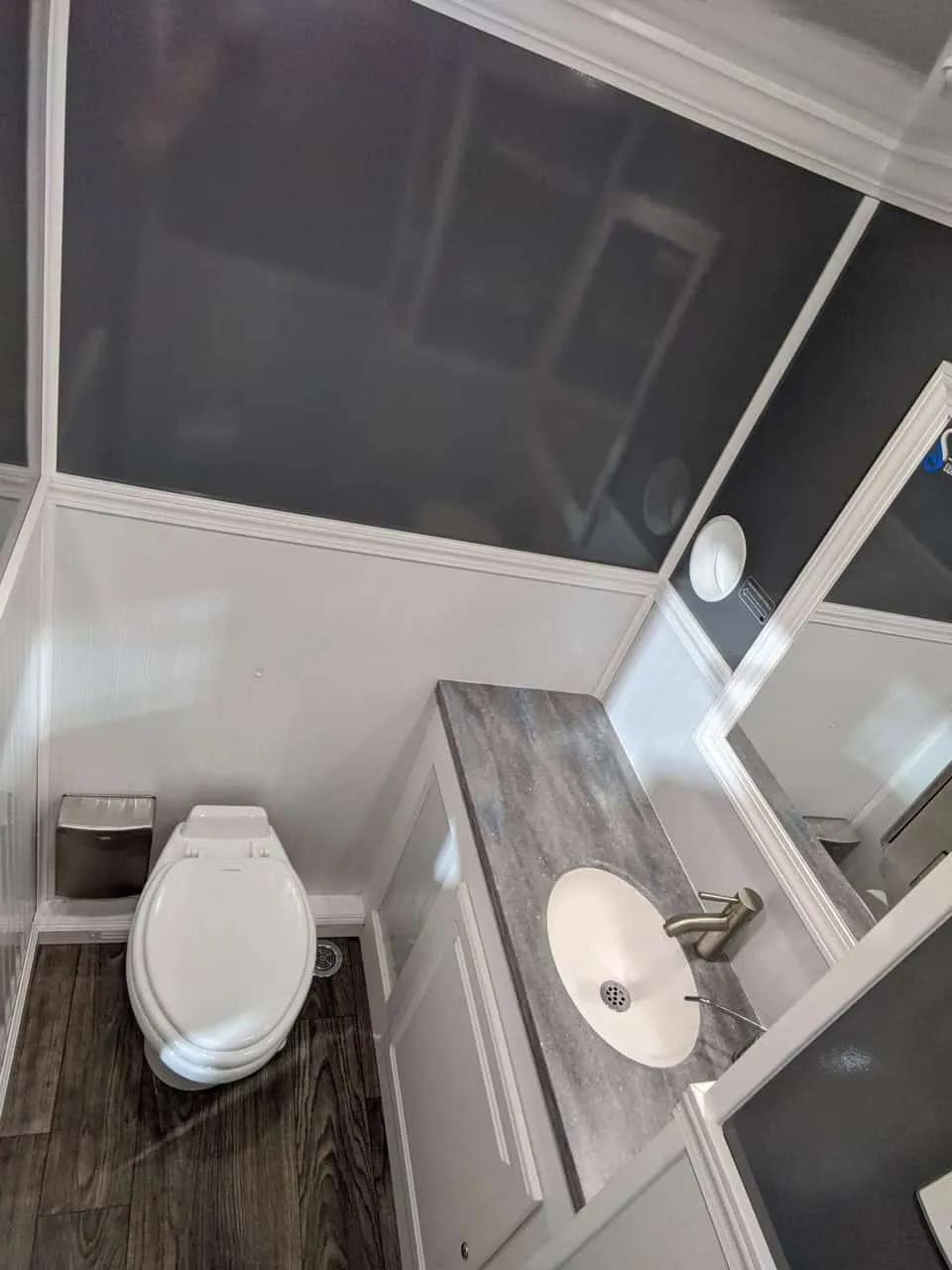
Residential development across Texas continues at a remarkable pace, with new subdivisions and housing communities transforming farmland into neighborhoods throughout the state. From master-planned communities outside Houston to new developments surrounding Austin and the expanding suburbs of Dallas-Fort Worth, these projects create ongoing demand for worker sanitation facilities. Restroom trailers have become standard equipment for Texas residential developers and homebuilders, providing comfortable facilities that support productive construction across multi-year development timelines.
Understanding Residential Development Phases
Residential developments progress through distinct phases, each with different restroom facility requirements. Land development phases involve grading, utility installation, and road construction, typically employing crews of 30-50 workers with heavy equipment. Vertical construction phases bring individual homebuilders to prepared lots, with workforce numbers depending on how many homes are under construction simultaneously.
Early development phases concentrate workers in specific areas as infrastructure advances across the site. Restroom facilities can be centrally located to serve this concentrated workforce. As the development matures and home construction spreads across the community, additional facilities may be needed to serve dispersed work locations.
The transition from developer-controlled land development to individual lot construction often involves changes in restroom responsibility. Developers typically provide facilities during infrastructure phases, while homebuilders may assume responsibility once they take control of individual lots.
Infrastructure Phase Sanitation Requirements
Land development and infrastructure installation represent the most intensive construction phase in residential developments. Crews install water mains, sanitary sewers, storm drainage, electrical systems, telecommunications, and gas lines. Road construction follows, preparing the development for home construction.
OSHA requirements mandate restroom facilities based on total workforce, typically requiring one facility per 20 workers during these phases. However, the distributed nature of utility work often necessitates multiple facility locations to ensure reasonable access across the work site.
Infrastructure crews work outdoors in all Texas weather conditions. Air-conditioned restroom trailers provide essential relief during summer months when temperatures exceed 100 degrees. The extended duration of infrastructure phases—often six months or longer—makes climate control particularly valuable.
Model Home and Sales Center Support
As residential developments prepare for sales, model home construction and sales center preparation create new restroom requirements. Construction workers building model homes need standard work site facilities, while sales staff and visiting homebuyers require more refined accommodations.
Quality ADA-compliant restroom trailers near model home complexes serve both construction workers during buildout and visitors once sales operations begin. Developers often position these facilities to remain accessible to homebuyers while permanent facilities in sales centers or community buildings are completed.
The transition from construction to sales operations requires attention to facility presentation. Clean, well-maintained restroom trailers create positive first impressions for homebuyers visiting the development. Consider upgrading to luxury-tier facilities near sales operations if budget permits.
Multi-Builder Development Coordination
Many Texas residential developments involve multiple homebuilders working simultaneously on different sections or product lines. Master-planned communities may include five or more builders, each with their own construction teams and subcontractors. Coordinating restroom facilities across these operations requires clear agreements and communication.
Developer-provided central facilities can serve all builders during initial development phases. As builders take control of individual lots, responsibility for restroom facilities typically transfers to each builder for their workers. Development agreements should specify these transitions and minimum facility standards.
Shared facilities in central locations can supplement individual builder provisions, particularly for subcontractors who work across multiple builders. Community amenity areas, parks, or common spaces often host these shared facilities throughout the development timeline.
Phased Construction Planning
Texas residential developments typically build out over multiple years in distinct phases. Initial phases establish infrastructure and begin home construction, while subsequent phases extend the development footprint. Restroom facilities must grow with the development, relocating or expanding as construction spreads.
Planning restroom placement for each phase prevents facilities from ending up in inconvenient locations as the development grows. As earlier phases complete and residents move in, construction facilities should relocate away from occupied areas to minimize disruption to new homeowners.
Long-term rental agreements spanning multiple phases offer cost advantages over sequential short-term rentals. Discuss development timelines with rental providers to negotiate favorable terms for extended projects. Flexible agreements allow adjusting capacity as phase sizes and builder activity levels change.
Texas Climate Considerations for Development Sites
Residential construction in Texas occurs year-round, exposing workers to extreme heat in summer and occasional freezing temperatures in winter. Climate-controlled restroom trailers address both extremes, maintaining comfortable conditions regardless of outdoor temperatures.
Summer heat creates particular challenges for outdoor construction workers. Proper hydration is essential for preventing heat-related illness, but workers may limit fluid intake to avoid using uncomfortable hot restroom facilities. Air-conditioned restroom trailers encourage healthy hydration habits by providing cool, comfortable facilities.
Texas developments often lack mature trees during construction phases, eliminating shade that might moderate temperatures around facilities. Position restroom trailers where possible to minimize direct afternoon sun exposure on western walls. Consider portable shade structures if natural shade is unavailable.
Service and Maintenance Over Extended Timelines
Residential development projects spanning multiple years require consistent service arrangements. Establishing reliable service schedules from the start ensures continuous facility quality throughout the project. Weekly service typically works for moderate usage, with adjustments based on seasonal workforce variations.
As developments progress, service access may change. Roads that provided easy access during early phases may become residential streets where service vehicle presence should be minimized. Discuss changing access patterns with service providers and adjust schedules to minimize impact on new residents.
Long-term facility use requires attention to equipment condition. Quality rental providers maintain their equipment and address issues promptly. Discuss replacement or refurbishment policies for extended rentals to ensure facilities remain in acceptable condition throughout multi-year projects.
Community Relations and Resident Considerations
As residential developments mature and families move in, construction activity continues in later phases. Managing the interface between new residents and ongoing construction requires sensitivity to community concerns. Restroom facilities should be positioned away from occupied homes and maintained to professional standards.
Resident perception of construction site conditions reflects on the developer and builders. Clean, well-maintained restroom trailers demonstrate professional standards that reassure new homeowners about development quality. Neglected facilities suggest broader construction quality concerns.
Consider resident feedback when positioning facilities for later phases. Homeowner associations may have concerns about facility visibility or service vehicle traffic. Working with HOA leadership to address concerns maintains positive community relations during ongoing development.
Cost Management for Multi-Year Projects
Residential development restroom costs accumulate over multi-year timelines. Strategic planning minimizes total cost while maintaining adequate facilities. Multi-year rental agreements typically offer better rates than sequential annual contracts, and volume commitments across the development may qualify for additional discounts.
Allocating restroom costs fairly among project participants requires clear agreements. Development agreements should address who provides facilities during each phase, how costs are shared among builders, and minimum standards for builder-provided facilities.
Balance initial facility investment against total project value. Residential developments represent multi-million dollar investments where worker productivity and safety directly affect profitability. Quality restroom facilities support the productive construction that brings developments to market on schedule.
Utility Connections and Independence
Residential developments eventually provide permanent water, sewer, and electrical utilities that restroom trailers can utilize. Connecting to permanent utilities when available reduces service requirements and operating costs. However, early phases may lack utility availability, requiring self-contained operation.
Restroom trailers can operate independently with onboard freshwater tanks, waste holding tanks, and generator or solar power. This independence allows positioning facilities where needed regardless of utility availability. As infrastructure progresses, transitioning to utility connections reduces ongoing service visits.
Discuss utility connection options with your rental provider. Some trailers connect easily to standard residential utilities while others require specific configurations. Planning for utility connections from the start simplifies transitions as infrastructure becomes available.
Planning Your Residential Development Restroom Strategy
Successful sanitation planning for Texas residential developments begins with understanding your complete development timeline. Map construction phases, identify transition points between developer and builder responsibility, and plan facility capacity to grow with the project. This comprehensive view enables strategic decisions that serve the entire development lifecycle.
Working with experienced Texas restroom trailer providers ensures appropriate recommendations for your development’s unique characteristics. Local providers understand Texas climate challenges, multi-year project requirements, and community considerations that affect facility planning for residential developments.
Quality restroom facilities support the productive construction that brings Texas communities to life. The investment in proper sanitation benefits workers, builders, and ultimately the families who will call your development home. Request a quote today to discuss restroom trailer solutions for your Texas residential development project.