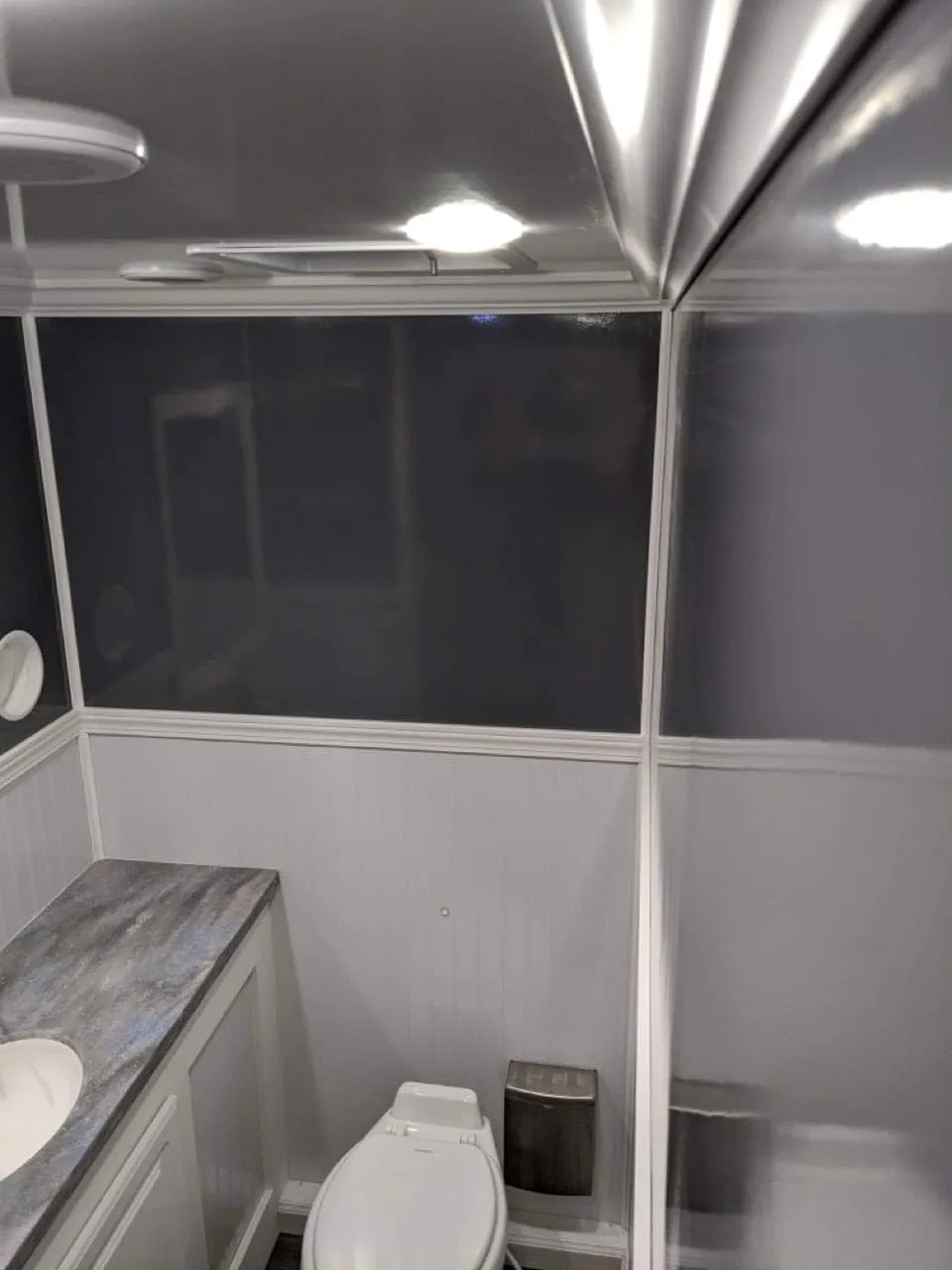
Successful restroom trailer delivery and setup requires coordination between you and your rental provider. Understanding the process helps you prepare your venue appropriately and ensures everything goes smoothly on delivery day. This guide covers what happens during restroom trailer delivery and what you need to have ready.
Before Delivery Day: Site Preparation
Proper preparation prevents problems during delivery. Address these items before the delivery crew arrives:
Clear the Access Route
Restroom trailers are towed by large trucks that need significant maneuvering room. The access route from the road to your placement location must be clear of:
- Parked vehicles
- Temporary structures or tents
- Vendor equipment
- Decorations or signage
- Debris or landscaping materials
A standard delivery vehicle with trailer needs at least 12 feet of width and may require 50 feet or more of turning radius. For ranch properties or venues with winding driveways, walk the route yourself to identify potential tight spots.
Check Overhead Clearances
Low-hanging tree branches, decorative arches, or power lines can obstruct delivery. Most restroom trailers stand 10-12 feet tall when on the tow vehicle. Identify and address any overhead obstacles along the access route. Temporary branch trimming may be necessary at some venues.
Prepare the Placement Area
The location where the trailer will sit needs to meet certain conditions:
- Level ground: Slight slopes are manageable, but significant grades create problems
- Firm surface: The trailer’s stabilizing jacks need solid ground to prevent sinking
- Adequate space: Allow room for the trailer plus ramp deployment and guest queuing
- Access from venue: Guests should be able to reach facilities conveniently
Avoid low-lying areas where water collects after rain. Texas thunderstorms can appear quickly—a flooded trailer location creates a poor guest experience and potential safety hazards.
Address Soft Ground Conditions
Soft soil, especially after rain, presents challenges. Trailer wheels and stabilizing jacks can sink into soft ground, making leveling difficult and later removal complicated. If your venue has soft terrain:
- Discuss ground protection options with your provider
- Plywood sheets under wheels and jacks help distribute weight
- Specialized ground mats provide a stable surface
- Consider relocating to a firmer area if possible
Your rental provider has experience with Texas venue conditions and can advise on solutions for specific situations.
The Delivery Process
On delivery day, the crew follows a systematic process to position and prepare your restroom trailer.
Arrival and Initial Assessment
When the delivery crew arrives, they’ll assess the access route and placement location. Even with prior planning, conditions change—a vehicle may have parked in the way, or yesterday’s rain may have softened an area. The crew evaluates current conditions and determines the best approach.
If you’re on-site, be available to answer questions and help coordinate with venue staff. Clear communication prevents misunderstandings about exactly where the trailer should be positioned.
Positioning the Trailer
The driver maneuvers the tow vehicle to position the trailer at the designated spot. This may involve multiple positioning attempts to achieve optimal placement. The crew considers:
- Door orientation toward guest pathways
- Ramp positioning for safe access
- Distance from event activities (not too close, not too far)
- Privacy from main event areas
- Proximity to power source if using venue electricity
Once positioned, the trailer is detached from the tow vehicle.
Leveling
A level trailer is essential for proper operation. Doors swing correctly, waste tanks drain properly, and guests experience a stable floor. The crew uses built-in stabilizing jacks and may add leveling blocks as needed.
Leveling takes time—rushing this step causes problems later. The crew will check level at multiple points and make adjustments until the trailer is properly stabilized.
Steps and Ramp Deployment
Entry steps are deployed and secured. Standard trailers have fold-out steps; ADA-compliant units require ramps positioned at the proper slope with secured handrails.
Ramp placement needs adequate clearance—the ramp itself extends 6-10 feet from the trailer entrance. Ensure this space remains clear and doesn’t interfere with pedestrian traffic or other event elements.
Connecting Utilities
Restroom trailers require power and have water needs that must be addressed during setup.
Electrical Connection
Most restroom trailers require 20-50 amp electrical service depending on size and features. Climate control (especially air conditioning) represents the largest power draw. Options include:
- Venue power: Some venues have exterior panels with adequate capacity. Extension cords rated for the required amperage connect the trailer to venue power.
- Generator: The most common solution, especially for venues without outdoor electrical access. Generators should be positioned where noise doesn’t disturb guests—typically 50-100 feet from event areas.
- Onboard generator: Some trailers include built-in generators, simplifying power logistics.
The delivery crew connects power and tests all systems—lights, ventilation, climate control, and water heaters if equipped.
Water Systems
Restroom trailers feature onboard freshwater tanks that are filled before delivery or upon arrival. Tank capacity varies but typically provides 100-300 gallons—sufficient for most single-day events.
For multi-day events or high-usage situations, options include:
- Scheduled water refills during the event
- Connection to venue water supply via garden hose
- Larger capacity trailers with bigger tanks
The crew checks that water pumps operate correctly and sinks produce flowing water.
Waste Tank Verification
Waste holding tanks should arrive empty and are verified before the crew departs. Tank capacity matches or exceeds freshwater capacity—the trailer can handle the waste generated from the water it carries.
Final Setup and Walkthrough
Before leaving, the delivery crew completes final preparations and provides you with essential information.
Systems Check
The crew verifies all systems are operational:
- All toilets flush properly
- Sinks produce hot and cold water (if equipped with water heater)
- Interior and exterior lights function
- Climate control maintains appropriate temperature
- Ventilation fans operate
- Door locks work correctly
Supply Stocking
The trailer is stocked with initial supplies:
- Toilet paper in all stalls
- Hand soap in dispensers
- Paper towels
- Any additional supplies specified in your rental agreement
For longer events, extra supplies may be left with you or scheduled restocking visits arranged.
Your Walkthrough
The crew will walk you through basic trailer operation:
- Light switches and thermostat locations
- How to adjust climate control settings
- Generator operation if applicable
- Supply storage locations
- What to do if issues arise
- Emergency contact information
Ask questions during this walkthrough. Understanding basic operation helps you address minor issues without waiting for support.
Setup Timeline
Plan adequate time for delivery and setup. A typical timeline:
- Simple venue, single trailer: 45-90 minutes
- Complex venue or difficult access: 1.5-2.5 hours
- Multiple trailers: Add 30-45 minutes per additional unit
- ADA units with long ramps: Add 15-30 minutes for ramp setup
Most rental companies recommend delivery the day before your event when possible. This allows time to address any unexpected issues and ensures facilities are ready when guests arrive.
Weather Considerations in Texas
Texas weather can complicate delivery logistics. Heavy rain softens ground and creates access difficulties. Extreme heat requires functioning climate control before guests arrive. Wind can affect leveling and ramp stability.
Your provider monitors weather forecasts and may contact you about timing adjustments. Early morning deliveries during summer avoid the worst heat. Post-rain delays may be necessary if ground conditions become problematic.
Communicate openly with your provider about weather concerns—they want successful delivery as much as you do.
Plan for Success
Restroom trailer delivery is straightforward when both parties prepare appropriately. Clear access, level ground, and available utilities make the process efficient. Your rental provider brings the expertise—your job is having the site ready.
Ready to arrange restroom trailer delivery for your Texas event? Request a quote and we’ll discuss site requirements and logistics specific to your venue.