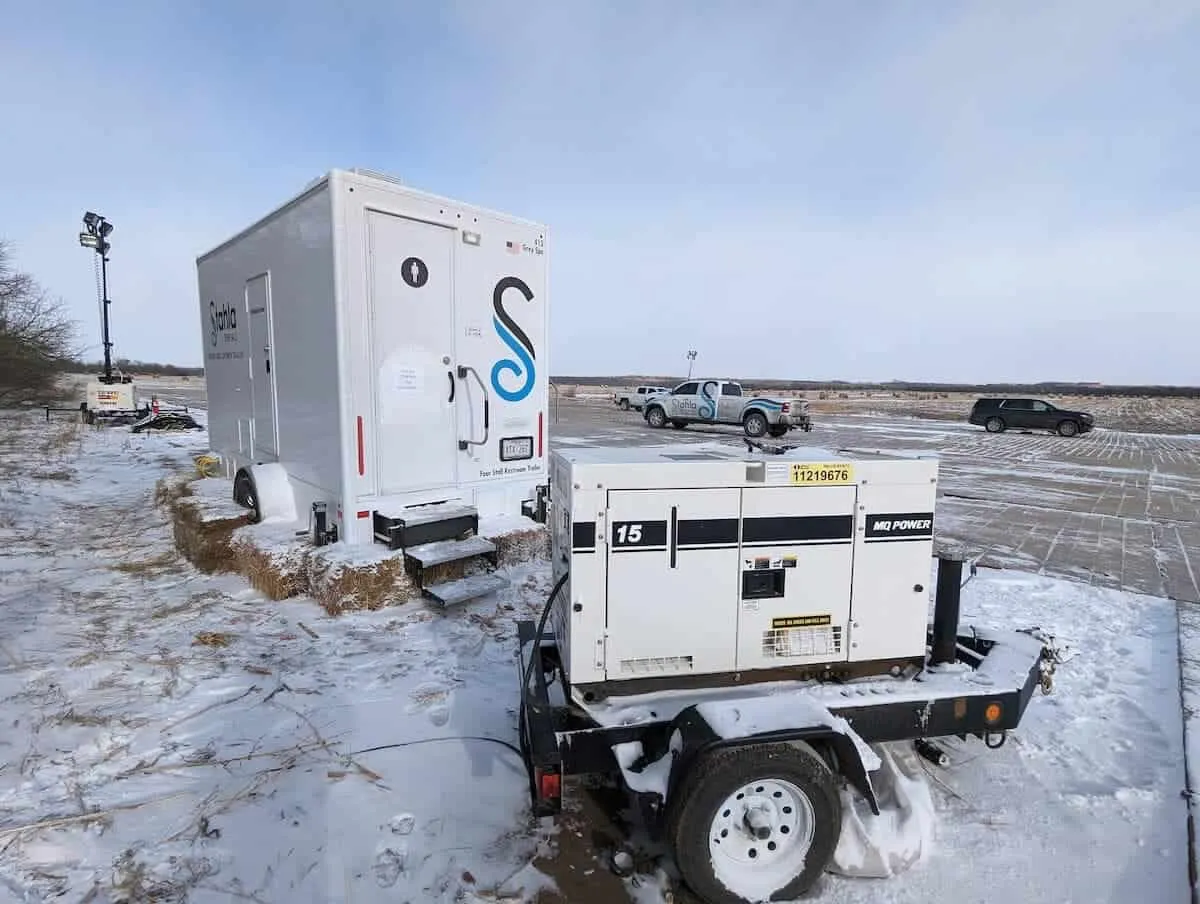
Road construction projects across Texas present distinctive challenges for worker sanitation that differ significantly from stationary job sites. Whether resurfacing rural highways in West Texas, expanding urban interstates in the Dallas-Fort Worth metroplex, or building new roadways in developing areas, these linear projects require mobile sanitation solutions that move with the work. Restroom trailers have become essential equipment for Texas road construction crews, providing the comfort and compliance these demanding projects require.
The Unique Nature of Linear Construction Projects
Unlike building construction where work concentrates on a single site, road projects stretch across miles of terrain. A highway resurfacing project might span 15 miles, while a new road construction project could extend even further. Workers move along this linear path as construction progresses, requiring restroom facilities that either move with them or are strategically positioned along the route.
This mobility requirement fundamentally changes restroom planning. Facilities positioned at the project start become increasingly distant from active work areas as construction advances. Crews working at the far end of a 10-mile project can’t reasonably return to the starting point for restroom breaks.
Texas road projects also face access challenges that fixed construction sites don’t encounter. Work zones often lack developed access roads, requiring facilities that can be positioned and relocated using existing terrain. Weather events can quickly change ground conditions, affecting both facility placement and access paths.
Mobile vs. Fixed Facility Strategies
Road construction managers typically choose between mobile facilities that advance with the work and fixed facilities at strategic intervals. Each approach offers advantages depending on project characteristics, crew size, and construction methods.
Mobile facilities move as the work progresses, maintaining proximity to active work zones. Restroom trailers designed for frequent relocation handle the demands of road construction well, with durable construction and practical towing requirements. This approach minimizes worker travel time but requires regular relocation coordination.
Fixed facilities at regular intervals—perhaps every 2-3 miles along the project corridor—provide consistent access without relocation logistics. Workers always know where facilities are located, and service follows predictable schedules. However, workers at any point along the corridor face some travel distance to reach facilities.
Many Texas road projects combine approaches, with restroom trailers at established staging areas supplemented by portable facilities that move with active work zones. This hybrid strategy balances comfort, access, and logistics across extended project corridors.
Texas Climate Challenges for Road Construction Crews
Road construction in Texas occurs year-round, exposing workers to the full range of state weather conditions. Summer temperatures exceeding 100 degrees make climate-controlled restroom facilities essential rather than optional. Workers already stressed by outdoor heat exposure desperately need cool, comfortable restroom facilities.
Air-conditioned restroom trailers provide relief from Texas heat that traditional portable toilets cannot match. The temperature inside a standard portable toilet on a summer afternoon can exceed 130 degrees, creating dangerous conditions and discouraging proper facility use. Workers who avoid restrooms also avoid proper hydration, creating a dangerous cycle.
Winter road construction, while less common, still occurs across Texas. Northern regions and the Panhandle experience freezing temperatures that can damage unprotected plumbing. Heated restroom trailers with freeze protection maintain operation during cold snaps that would disable standard portable facilities.
Crew Sizes and Capacity Planning
Road construction crews vary significantly based on project type and phase. Initial grading work might involve 20-30 workers with heavy equipment, while paving phases could add another 30-50 workers. Finishing work, striping, and signage installation often involve smaller specialized crews.
Calculate restroom requirements based on your peak workforce while considering workforce distribution along the project corridor. OSHA minimums apply to total workers, but practical access requires facilities distributed appropriately across work zones.
Night shift road work, common in urban Texas to minimize traffic disruption, requires 24-hour facility availability. Service schedules must accommodate night operations while maintaining daylight access for service vehicles.
Access and Positioning Considerations
Positioning restroom facilities along road construction corridors requires attention to access, visibility, and work zone safety. Facilities must be accessible to workers without requiring travel through active construction zones, yet positioned close enough to minimize lost work time.
Level ground with adequate stability supports restroom trailer placement. Road construction often involves disturbed earth conditions, requiring prepared pads or reinforcement for facility positioning. Consider drainage patterns to prevent water accumulation around facilities during rain events.
Work zone safety requires facilities positioned outside active traffic areas while remaining accessible to workers. Coordinate placement with traffic control plans, ensuring service vehicles can access facilities without disrupting construction traffic patterns.
TxDOT Project Requirements
Texas Department of Transportation projects carry specific requirements for contractor-provided facilities. TxDOT specifications typically require sanitary facilities for workers, with standards that meet or exceed OSHA requirements. Understanding these specifications during bid preparation ensures accurate cost projections.
TxDOT projects often involve inspector access and may require visitor-appropriate facilities. ADA-compliant restroom trailers serve both accessibility requirements and professional presentation for inspectors, engineers, and project stakeholders visiting work zones.
Documentation requirements on TxDOT projects may include records of sanitation provisions, service schedules, and compliance verification. Maintain records demonstrating consistent facility access and maintenance throughout project duration.
Service Logistics for Linear Projects
Servicing restroom facilities along road construction corridors presents logistical challenges that stationary sites don’t face. Service vehicles must navigate active work zones, potentially traveling miles to reach distributed facilities. Coordinate service schedules with construction traffic patterns to minimize disruption.
Remote road construction in West Texas or other rural areas may require extended service routes. Discuss geographic coverage with rental providers, ensuring they can reliably service facilities at your project location. Some projects may require adjusted service schedules to accommodate travel distances.
As facilities relocate with advancing construction, service providers need updated location information. Establish communication protocols for notifying providers of facility moves, ensuring uninterrupted service as the project progresses.
Handwashing and Hygiene on Road Projects
Road construction workers handle asphalt, concrete, sealants, and other materials requiring thorough handwashing. OSHA mandates potable running water for handwashing, a requirement that restroom trailers fulfill with integrated sink stations featuring hot and cold water.
Standard portable toilets with only hand sanitizer don’t meet OSHA handwashing requirements. Road construction using portable toilets must provide separate handwashing stations, adding equipment and service requirements. Restroom trailers consolidate all facilities in one unit.
Workers dealing with petroleum-based materials particularly need proper handwashing facilities. Fuel, oil, and asphalt residues don’t clean effectively with hand sanitizer alone. Running water and soap provide the cleaning necessary to protect worker health.
Night Operations and Lighting
Urban road construction in Texas frequently occurs at night to minimize traffic impacts. Interstate expansion projects, urban arterial work, and bridge construction often operate primarily during overnight hours. Restroom facilities must support these operations with adequate lighting and 24-hour accessibility.
Restroom trailers include interior lighting that operates on the same power supporting climate control systems. Exterior approach lighting improves safety for workers navigating to facilities in dark conditions. Solar-powered exterior lights offer solutions for facilities without grid power connection.
Service schedules for night operations require coordination to minimize disruption while maintaining facility availability. Consider scheduling service during shift transitions when facility demand temporarily decreases.
Subcontractor Coordination
Road construction projects involve multiple subcontractors—grading crews, utility installers, paving teams, and finishing specialists—often working simultaneously along different project segments. General contractors typically provide restroom facilities for all workers, with costs allocated through subcontract provisions.
Clear communication about facility locations helps subcontractors plan their work. As facilities move or new facilities are added, update all parties about current locations. Subcontractors unfamiliar with the project corridor need guidance on facility access.
Peak periods when multiple subcontractors work simultaneously create highest facility demand. Anticipate these overlap periods when planning capacity, ensuring adequate facilities for combined workforce requirements.
Planning Your Road Construction Restroom Strategy
Successful sanitation planning for Texas road construction begins with understanding your project’s linear nature and progression timeline. Map the project corridor, identify staging areas and access points, and determine how facilities will move or be distributed as construction advances.
Working with experienced Texas restroom trailer providers ensures appropriate recommendations for your road project’s unique challenges. Local providers understand TxDOT requirements, rural access challenges, and climate considerations that affect linear construction projects across the state.
Quality restroom facilities contribute to worker productivity and retention on demanding road construction projects. The investment in proper sanitation demonstrates professionalism and creates conditions where workers can perform their best throughout extended project durations. Request a quote today to discuss restroom trailer solutions for your Texas road construction project.