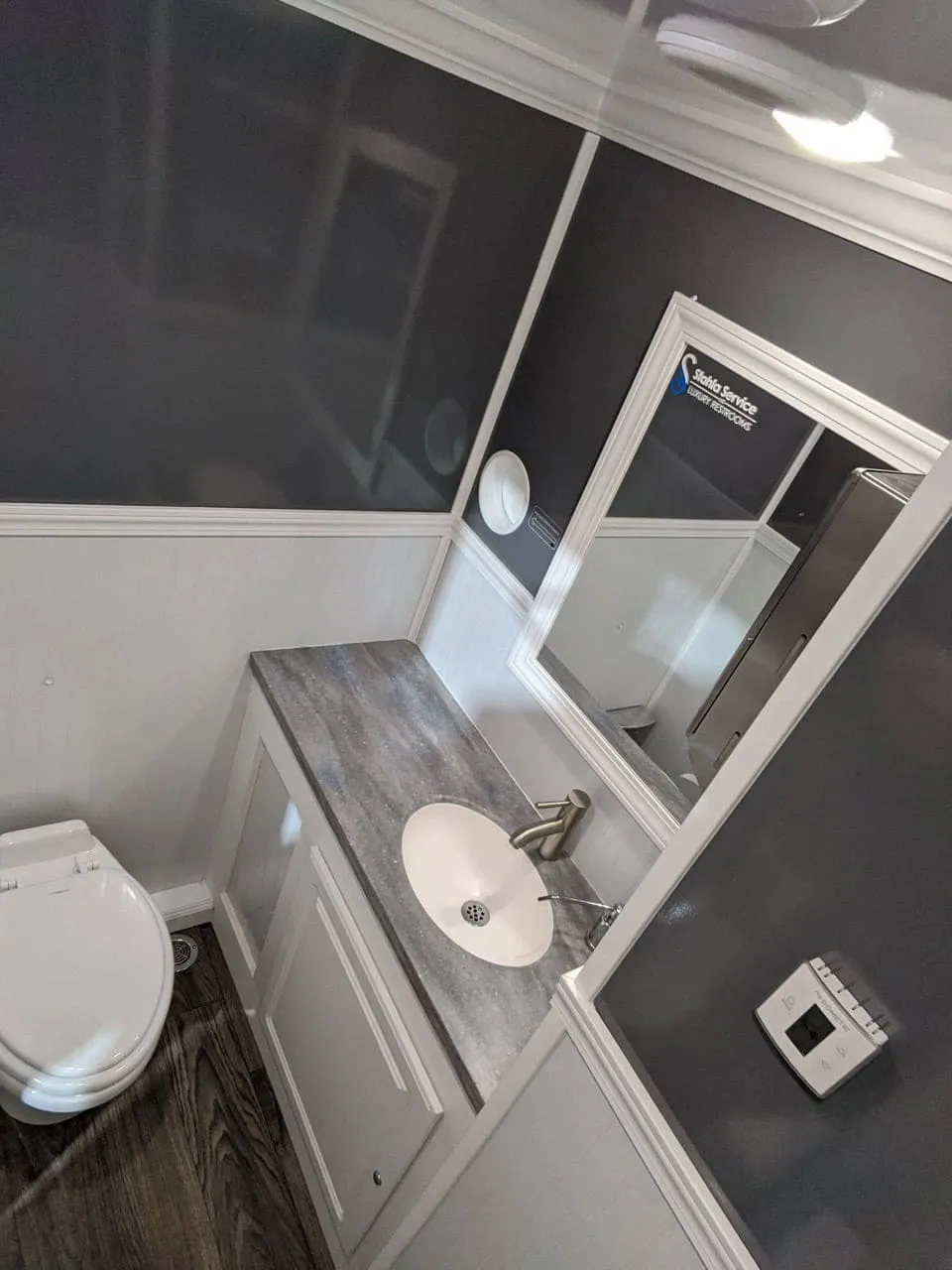
Texas has emerged as a national leader in solar energy development, with utility-scale solar farms transforming thousands of acres across the state. From the sun-drenched plains of West Texas to sprawling installations in South Texas, these projects require comprehensive worker sanitation solutions that can handle remote locations, large workforces, and intense Texas heat. Restroom trailers have become essential infrastructure for solar construction projects, providing the climate-controlled comfort and capacity these demanding installations require.
The Scale of Texas Solar Construction
Utility-scale solar installations in Texas commonly span 1,000 to 5,000 acres or more. These massive projects require substantial construction workforces—often 200 to 500 workers during peak installation phases—spread across areas equivalent to several square miles. The distributed nature of solar construction creates unique challenges for providing accessible restroom facilities.
Solar farm construction progresses through distinct phases with different workforce requirements. Early civil work—site grading, road construction, and foundation installation—may involve 50-100 workers. Racking and panel installation phases see the largest workforces as crews install millions of solar panels. Electrical work and commissioning complete the project with smaller specialized crews.
Project timelines typically span 12-18 months for major installations, requiring extended restroom trailer rentals throughout construction. The combination of large acreage, substantial workforces, and extended durations makes restroom planning essential for project success.
Remote Location Challenges
Solar farms locate where land is available and sunlight is abundant—typically rural areas far from developed infrastructure. West Texas installations may be 50 miles or more from the nearest town. These remote locations lack the permanent facilities, utility connections, and service infrastructure that urban construction sites provide.
Self-contained restroom trailers designed for remote operation are essential for solar farm construction. These units feature onboard freshwater tanks, waste holding tanks, and generator power, operating independently of external utilities. While requiring regular service for water and waste management, they function effectively in locations without any existing infrastructure.
Service logistics require careful planning for remote sites. Service vehicles must travel significant distances to reach facilities, and unpaved site roads may limit access during wet weather. Establish service routes and schedules that account for travel times and potential access limitations.
Extreme Heat Considerations
Solar farms are built where sunlight is strongest—which in Texas means the hottest regions of the state. West Texas, South Texas, and the Rio Grande Valley regularly experience temperatures exceeding 100 degrees during summer construction months. Workers installing panels in direct sun face severe heat stress.
Air-conditioned restroom trailers provide essential heat relief for solar construction workers. The temperature inside a standard portable toilet on a Texas summer afternoon can exceed 130-140 degrees—dangerous conditions that discourage proper facility use and hydration. Climate-controlled trailers maintain comfortable temperatures that encourage necessary breaks.
Proper hydration is critical for workers in extreme heat, but workers may limit fluid intake to avoid uncomfortable hot restroom facilities. Air-conditioned restroom trailers break this dangerous cycle, encouraging workers to drink adequate fluids knowing they have comfortable facilities available.
Distributed Facility Placement
Solar farm acreage creates challenges for restroom access. A worker at one end of a 3,000-acre installation cannot reasonably travel to facilities at the opposite end for routine restroom breaks. Distributed facility placement ensures reasonable access for workers across the entire project footprint.
Consider positioning restroom trailers at regular intervals—approximately every quarter to half mile across the site—during peak installation phases. This distribution ensures no worker is more than a few minutes’ walk from facilities. As work concentrates in specific areas during different phases, facilities can be consolidated or relocated.
Mobile restroom solutions that follow installation crews provide another approach. Trailer-mounted or skid-mounted facilities can be repositioned as work advances across the site. This approach maintains proximity to active work areas without requiring permanent placement decisions.
OSHA Compliance for Large Workforces
Peak solar installation workforces of 300-500 workers require substantial restroom capacity under OSHA standards. For sites exceeding 200 workers, regulations require one toilet and one urinal per 50 workers. A 400-worker site needs at least 8 toilet facilities and 8 urinals as a minimum baseline.
Distribution matters as much as total count. OSHA requires facilities to be reasonably accessible, which for sprawling solar sites means multiple locations serving different areas. The practical requirement often exceeds OSHA minimums simply to provide reasonable access across large project footprints.
ADA-compliant restroom trailers ensure accessibility for workers with disabilities. Position accessible units at project offices, equipment yards, and other locations where workers with mobility impairments may be employed. Remote panel installation areas may have practical access limitations, but support areas should provide full accessibility.
Staging Areas and Support Facilities
Solar projects establish staging areas and equipment yards that serve as project hubs. These locations store materials, maintain equipment, and house administrative functions. High-quality restroom trailers at staging areas serve workers starting and ending their days, administrative staff, and project visitors.
Staging areas may have access to temporary power through site generators or utility connections, simplifying climate control operation for restroom trailers. If water service is available, connecting trailers to water supply reduces service frequency requirements.
Project visitors—investors, utility representatives, inspectors, and landowners—typically access projects through staging areas. Professional restroom facilities at these locations create impressions that reflect on the entire operation. Consider premium facilities for visitor-accessible locations on high-profile projects.
Subcontractor Coordination
Solar farm construction involves multiple specialty contractors—civil work, racking installation, panel mounting, electrical systems, and grid connection. General contractors or EPC firms typically provide restroom facilities for all workers, allocating costs through subcontract provisions. Clear communication about facility locations helps coordinate work across contractors.
Different contractors work in different areas at different times, affecting optimal facility placement. Civil work may concentrate at one end of the site while panel installation proceeds elsewhere. Flexible facility placement or mobile solutions accommodate these shifting work patterns.
Peak overlap periods when multiple trades work simultaneously create highest restroom demand. Plan capacity for these overlap periods rather than any single contractor’s workforce. Communication among contractors about workforce numbers helps anticipate demand fluctuations.
Service Logistics for Large Sites
Servicing distributed facilities across thousand-acre sites presents logistical challenges. Service vehicles must navigate internal site roads to reach each facility, potentially traveling miles within the project boundary. Coordinate service routes to maximize efficiency and minimize site traffic disruption.
Large workforces generate substantial waste volumes requiring frequent service. Twice-weekly or even more frequent service may be necessary during peak installation phases. Discuss service frequency requirements with providers based on your specific workforce numbers and usage patterns.
Weather affects service access on unpaved site roads. Texas thunderstorms can make dirt roads temporarily impassable. Establish contingency plans for weather delays and consider gravel or improved access to critical facility locations.
Environmental Considerations
Solar farms often locate on agricultural land or natural areas with environmental sensitivities. Proper waste management from restroom facilities protects against environmental contamination and demonstrates responsible construction practices. Documentation of proper waste disposal may be required by permitting authorities.
Landowner agreements may specify requirements for temporary facilities on leased land. Review lease terms for any provisions affecting restroom placement, waste management, or site restoration requirements. Landowner relations benefit from demonstrating responsible facility management.
Work with licensed service providers who properly dispose of waste from restroom facilities. Maintain service records documenting proper waste handling throughout the project. This documentation protects against environmental liability claims.
Extended Duration Planning
Solar construction spanning 12-18 months requires long-term restroom planning. Multi-month or multi-year rental agreements typically offer better pricing than sequential short-term rentals. Negotiate extended terms at project start to establish favorable rates for the entire construction period.
Facility needs fluctuate throughout project phases. Plan for adding capacity during peak installation phases and reducing during lighter periods. Flexible rental arrangements allow adjusting unit counts as workforce numbers change without penalty.
Equipment condition matters over extended rental periods. Discuss maintenance and replacement policies with providers to ensure facilities remain in acceptable condition throughout the project. Quality providers maintain their equipment and address issues promptly.
Planning Your Solar Farm Restroom Strategy
Successful sanitation planning for Texas solar construction begins with understanding your project’s scale, timeline, and workforce patterns. Map the project footprint, identify staging areas and access points, and plan distributed facility placement that serves workers across the entire installation.
Working with experienced Texas restroom trailer providers ensures appropriate recommendations for solar project challenges. Providers familiar with renewable energy construction understand remote location logistics, extreme heat considerations, and large workforce requirements specific to utility-scale solar development.
Quality restroom facilities support the productive workforce building Texas’s renewable energy future. The investment in proper sanitation demonstrates commitment to worker welfare and professional standards on projects that will power communities for decades. Request a quote today to discuss restroom trailer solutions for your Texas solar farm construction project.