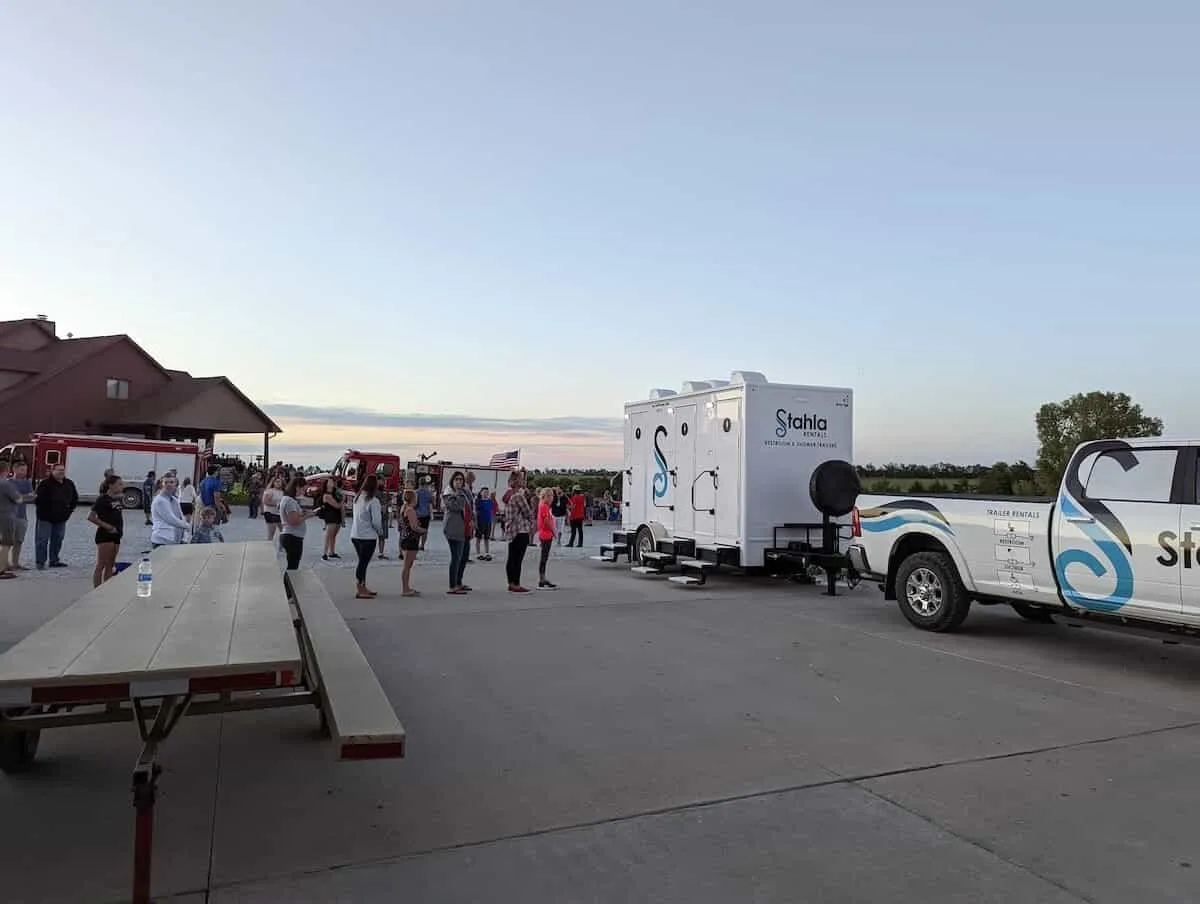
When wildfires force Texas communities to evacuate, residents flee with little notice and few belongings. Evacuation centers become temporary homes for families whose houses may be threatened or already destroyed. These emergency shelters face immediate challenges in providing basic services—including adequate sanitation—for populations that can swell from zero to hundreds within hours. Understanding how to support wildfire evacuation centers with restroom facilities helps communities respond effectively when fires threaten.
Texas Wildfire Risk
Texas wildfire risk has intensified in recent decades. Prolonged droughts, urban expansion into wildland areas, and changing climate patterns have combined to create conditions where devastating fires can occur almost anywhere in the state. While West Texas and the Hill Country face particular exposure, wildfires have struck communities from the Panhandle to the coast.
Major wildfire events have displaced thousands of Texas residents. The 2011 Bastrop County Complex fire destroyed over 1,600 homes and forced mass evacuations. The 2017 Panhandle fires burned over a million acres. These events demonstrated both the destructive potential of Texas wildfires and the infrastructure needed to support displaced populations.
The nature of wildfire evacuations creates particular challenges for emergency planners. Fires move quickly and unpredictably, giving communities little time to prepare. Evacuation orders may expand rapidly as conditions change, swelling shelter populations beyond initial planning.
Evacuation Center Operations
Wildfire evacuation centers typically open in schools, churches, community centers, or other public facilities. These buildings have existing restroom facilities designed for their normal use—adequate for school children during a school day, but insufficient for hundreds of displaced residents around the clock.
Supplemental restroom trailers bridge this capacity gap. Self-contained units positioned outside the evacuation center provide additional toilet and handwashing facilities that support the displaced population’s needs.
The around-the-clock nature of evacuation centers creates sustained demand. Unlike schools where facilities see peak use during specific periods, evacuation centers host people 24 hours a day, with usage spread throughout day and night. Facilities must be sized and serviced for this continuous operation.
Rapid Scaling Requirements
Wildfire evacuations can escalate rapidly. An evacuation order covering 500 residents might expand to 5,000 within hours as fires spread. Evacuation centers must scale their capacity—including sanitation—to match these changing populations.
Initial facility deployments should anticipate growth. Starting with somewhat more capacity than immediately needed provides buffer for population increases while additional resources mobilize.
Maintain communication with your facility provider as situations develop. Early notice about potential expansion helps ensure additional equipment is available when needed. Providers with emergency response experience understand these dynamics and maintain capacity for rapid scaling.
Serving Diverse Evacuee Populations
Evacuation center populations include the full diversity of affected communities—families with young children, elderly residents, people with disabilities, and individuals with medical needs. Facility planning must address this diversity.
Our ADA-compliant restroom trailers ensure accessible facilities are available for evacuees with disabilities. Include adequate accessible capacity at every evacuation center—at least one accessible unit per location, with more for larger facilities.
Position facilities to serve the varied mobility levels common in evacuation populations. Elderly residents and families with small children benefit from facilities positioned closer to shelter areas. Clear, level pathways support access for everyone.
Smoke and Air Quality Considerations
Wildfire smoke creates hazardous air quality that can persist for days or weeks even in areas not directly threatened by flames. Evacuation centers may be located in smoky areas, and evacuees have often spent hours breathing smoke during their evacuation journey.
Restroom trailers with climate control provide filtered, conditioned air that offers relief from smoky exterior conditions. While not medical-grade filtration, the improved air quality inside climate-controlled facilities provides welcome respite for evacuees whose respiratory systems have been stressed by smoke exposure.
Position trailer entries to minimize smoke infiltration when doors open. Orienting entries away from prevailing winds or providing covered entry areas helps maintain interior air quality.
Heat and Climate Challenges
Many Texas wildfires occur during hot, dry conditions—exactly when climate control matters most for restroom facilities. Summer temperatures exceeding 100°F make unair-conditioned facilities essentially unusable.
All restroom trailers deployed to evacuation centers should feature functional climate control. Air conditioning maintains usable interior temperatures despite exterior heat. Evacuees already under stress from displacement don’t need additional discomfort from inadequate facilities.
Winter wildfires, while less common, do occur in Texas. Heating capability ensures facilities remain functional during cold-weather events.
Duration Uncertainty
Wildfire evacuations can last anywhere from hours to weeks depending on fire behavior and containment progress. This uncertainty complicates planning but shouldn’t prevent adequate facility provision.
Plan initially for extended operations. It’s easier to demobilize facilities early if evacuations end quickly than to scramble for additional capacity if situations extend unexpectedly.
Flexible rental arrangements accommodate this uncertainty. Arrangements that allow early return or extension without penalty help evacuation centers adapt as situations develop.
Supporting Evacuation Center Staff and Volunteers
Evacuation centers require significant staffing—Red Cross volunteers, emergency management personnel, medical professionals, mental health workers, and many others. These workers need facility access separate from the evacuee population they serve.
Consider dedicated staff facilities positioned in operational areas rather than among evacuee sleeping spaces. This separation supports staff efficiency while maintaining appropriate boundaries between workers and residents.
Staff facilities see concentrated use during shift changes and meal breaks. Adequate capacity prevents delays that affect operational efficiency.
Power Independence
Wildfires often damage electrical infrastructure, and evacuation centers may operate in areas with unreliable power. Restroom facilities should function independently of potentially unstable electrical service.
Generator-powered facilities provide necessary independence. Plan for fuel logistics that maintain generator operation throughout the evacuation period, potentially for extended durations.
Self-contained water and waste systems complete the independence package, allowing facilities to operate regardless of utility status.
Service During Active Emergencies
Maintaining facility service during active wildfire emergencies presents challenges. Roads may be closed, smoke may limit visibility, and service personnel face the same emergency conditions affecting everyone else.
Size facilities with capacity for extended service intervals if normal service access becomes difficult. Larger tanks and supplies provide buffer when service can’t occur on regular schedules.
Communicate with your provider about access conditions. Information about road closures, evacuation zones, and access limitations helps service planning during active emergencies.
Coordination with Emergency Management
Evacuation center sanitation typically coordinates through emergency management structures. Understanding how restroom facilities fit into broader emergency response helps ensure effective coordination.
Establish contacts with emergency management and shelter management early in the event. Clear communication channels prevent confusion about what’s needed, where, and when.
Document all deployments for cost recovery purposes. FEMA reimbursement may be available for properly documented emergency facility costs.
Transitioning as Situations Resolve
As fires are contained and evacuation orders lift, shelter populations decline. Some residents return home quickly; others whose homes were destroyed may remain in shelters for extended periods.
Scale facility capacity as populations decrease. Units no longer needed at one location might be redeployed to support ongoing needs elsewhere or demobilized entirely.
Final demobilization should wait until evacuation centers officially close. Premature facility removal can create problems if circumstances unexpectedly change.
Supporting Texas Wildfire Response
Quality sanitation facilities support wildfire evacuation centers by providing dignified, comfortable facilities for displaced residents and the workers serving them. Communities that plan for evacuation sanitation respond more effectively when fires threaten.
Our experience serving Texas emergency response includes wildfire evacuation support across the state. We understand the rapid mobilization, scaling challenges, and extended operations that wildfire evacuations require.
Ready to discuss wildfire preparedness planning or current evacuation needs? Contact us today to develop sanitation solutions for your community’s wildfire response.